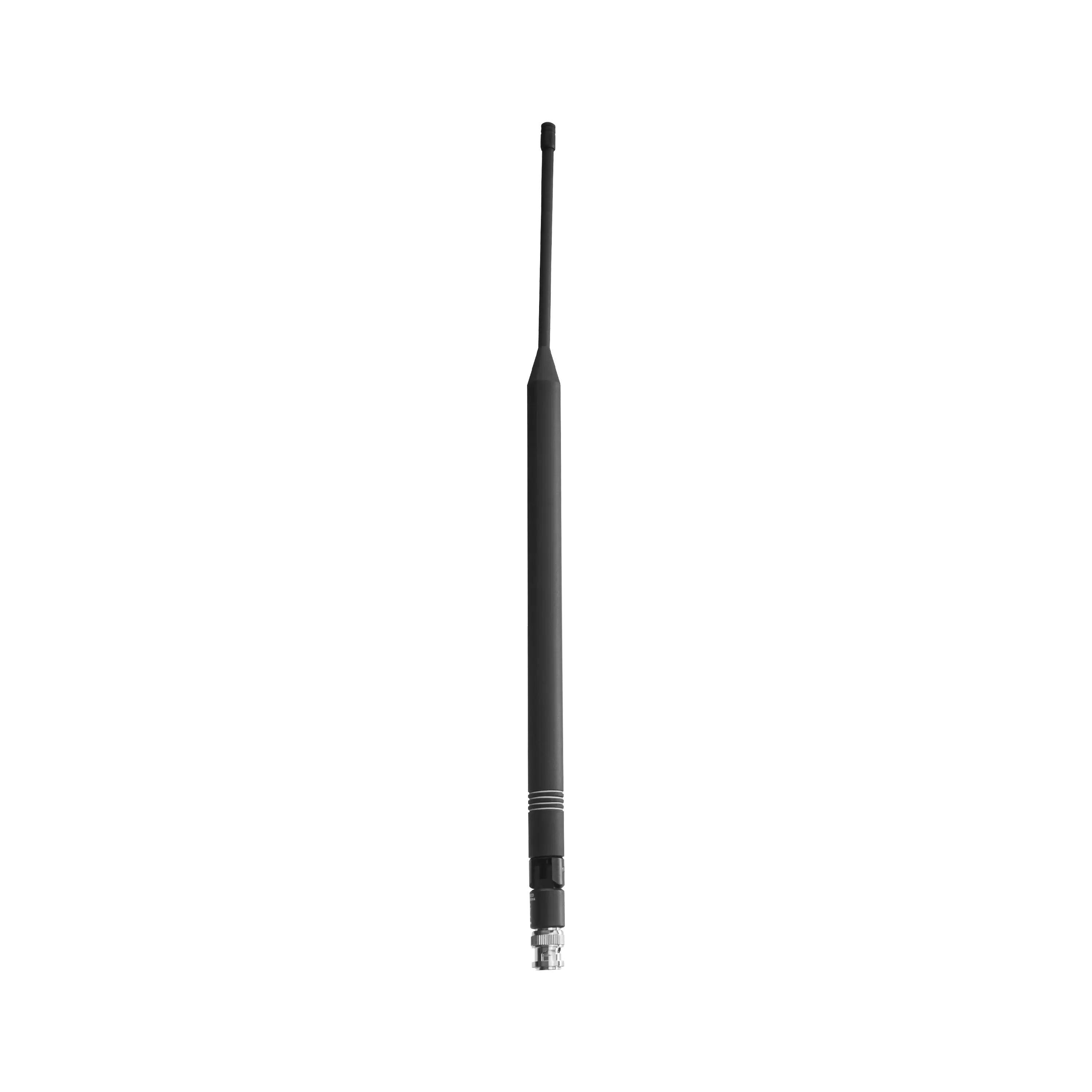
How External Antennas Improve Signal-to-Noise Ratio

Key Takeaways
- External antennas can improve signal-to-noise ratio (SNR) by increasing desired signal strength and reducing the impact of RF noise and interference.
- Remote antenna placement often improves wireless microphone and in-ear monitor performance by positioning antennas closer to transmitters.
- Directional antennas use antenna gain to focus RF reception, helping increase signal strength and reduce dropouts in challenging wireless environments.
- Proper antenna deployment requires balancing antenna gain, cable loss, amplification, and coverage requirements to maximize wireless system reliability.
- Improving signal-to-noise ratio is one of the most effective ways to enhance RF performance and maintain consistent wireless audio quality.
When it comes to wireless audio signal quality, nothing is more important than maintaining an excellent signal-to-noise ratio (SNR). Nothing.
Keeping signal-to-noise ratio as high as possible is the most effective (although not the only) ways to reduce dropouts, interference, and other wireless performance issues. There are many ways to improve SNR, but the use and careful placement of external antennas is often one of the most straightforward and effective solutions.
What Is Signal-to-Noise Ratio (SNR)?
Signal-to-noise ratio is the relationship between the strength of a desired signal and the level of background noise or interference surrounding it.
SNR measurements are used across many systems and components within an audio signal chain, like microphones, amplifiers, and wireless equipment. In wireless microphone and in-ear monitoring systems, SNR refers to the strength of the radio signal transmitted by the wireless device compared to the surrounding radio noise when measured at the receiver front-end (antenna input).
A higher signal-to-noise ratio generally results in more reliable wireless performance, while a lower SNR increases the likelihood of interference, dropouts, and other signal quality issues.
External antennas improve signal-to-noise ratio in one of two ways, which may benefit the user independently or in combination.
What Is an External (Remote) Antenna?
An external antenna, sometimes called a remote antenna, is any antenna connected to a receiver or antenna distribution system using a coaxial cable and placed somewhere other than directly on the receiver itself.
Whether the cable is three feet or three hundred feet long, the goal is the same: position the antenna in a location that improves signal reception and overall wireless system performance.
How External Antennas Improve Signal-to-Noise Ratio Through Proximity
If traveling through air, radio signals lose amplitude (signal strength) in accordance with the inverse square law; if the distance between a transmitter is doubled, the amplitude of the signal seen by the receiver will be four times less strong.
By contrast, remote antennas allow radio signals to travel through coaxial cable back to the receiver, rather than open air. As a result, a greater percentage of the received signal reaches the wireless receiver, often improving the signal-to-noise ratio (SNR)if a remote antenna is placed via coaxial cable somewhere closer to your wireless microphone or IEM receiver.
In practical terms, placing an external antenna closer to a wireless microphone, bodypack transmitter, or in-ear monitor (IEM) receiver can improve signal strength and help increase overall wireless system reliability.
Understanding Coaxial Cable Loss
Coaxial cable also introduces signal loss, commonly referred to as in-line attenuation or transmission line loss. The amount of attenuation depends on factors such as:
- Cable type
- Operating frequency
- Connector quality
- Cable length
- Cable condition
Industry standard 50 ohm RG8X coaxial cable loses about 10 dB per 100 feet, give or take depending on frequency of operation.
Fortunately, the added gain of an external antenna is able to compensate for this loss. However, when cable runs exceed 100 feet, users may need lower-loss cable types or the use of in-line amplification.
Amplification and Long-Distance Antenna Runs
In-line amplifiers can help compensate for cable loss, but they should be used carefully. While amplification increases signal strength, they decrease SNR by adding noise and can easily overload a sensitive receiver's front-end.
An Alternative: RF Over Fiber
For very long antenna runs, RF-over-fiber technology can provide another option.
These systems convert RF signals into optical signals and transport them over fiber-optic cable, which introduces very little attenuation compared to coaxial cable. This approach can help preserve signal strength across significantly longer distances.
How External Antennas Improve Signal-to-Noise Ratio Through Directionality
Antennas do more than receive and transmit RF signals. They can shape and concentrate fields of RF energy that travel between transmitter and receiver in powerful ways.
An antenna that concentrates radio energy to a high degree is said to be "directional." A directional antenna has increased sensitivity to radio waves in one direction, and decreased sensitivity in others. Directionality is usually quantified in decibels (dB) and described as having "antenna gain."
Generally speaking:
- High-gain antennas (typically 6 dB of gain or greater) provide more directional coverage and increased sensitivity in a focused area.
- Low-gain antennas (typically 6 dB of gain or less) provide broader coverage and receive RF energy more evenly from multiple directions.
The tradeoff is that higher-gain antennas provide a more focused coverage pattern, while lower-gain antennas cover a larger area but with less concentration of signal energy.
When properly deployed, directional antennas can improve signal-to-noise ratio (SNR) by increasing the strength of desired wireless signals while reducing sensitivity to unwanted RF signals and noise coming from other directions.
Common Directional Antenna Types
Two of the most common directional antennas used in wireless audio systems are:
- LPDA antennas, often called paddle or shark-fin antennas
- Helical antennas (examples include the Shure PASSIVE paddle and RF Venue CP Beam).
Both types of high gain antennas can be thought of as creating beams of reception or transmission that are more concentrated than with low gain antennas. When aimed at talent, performers, or wireless transmitters, they increase the strength of desired signals while reducing the impact of competing RF sources elsewhere in the environment.
When correctly deployed on a reasonable length of coaxial cable, directional antennas can dramatically improve signal-to-noise ratio (SNR), increasing a wireless system's resistance to interference and helping reduce the likelihood of dropouts.
Omnidirectional Antennas Can Improve SNR Too
Directional antennas are not the only way to improve wireless signal quality.
Low-gain omnidirectional antennas can also improve signal-to-noise ratio (SNR) when used as remote antennas and positioned closer to wireless transmitters.
Antennas like the Shure UA860SWB passive omnidirectional antenna or the RF Venue Spotlight antenna are often used in very close proximity to wireless microphones for improved SNR.
When properly deployed, they can place wireless transmitters inside a "bubble" of near-field coverage while helping reduce the influence of more distant sources of RF noise and interference. This can improve SNR and increase overall wireless system reliability.
Omnidirectional antennas are often a practical choice when wireless transmitters move throughout a coverage area or when broader RF coverage is required than a directional antenna can provide.
The Bottom Line
Many audio professionals are perfectly content with using stock antennas attached to their receivers in a rack. In many environments, those antennas may provide reliable performance with little or no noticeable interference.
While this is a fine assumption, the reality is that properly deployed external antennas and quality cabling can improve the performance of almost any wireless system. Small issues such as occasional dropouts or inconsistent signal quality can often be reduced or eliminated through improved antenna placement, increased signal-to-noise ratio (SNR), and more effective RF system design.
Furthermore, in both the UK and USA, the UHF broadcast spectrum upon which wireless microphones and in-ear monitors operate is growing increasingly scarce. This year the FCC plans to sell off all or most of the 600 MHz band to be repurposed for mobile services, and OFCOM recently confirmed plans to clear 694-790MHz by 2022 at the latest, though this change will likely happen by 2019.
Even if your system functions well now, in the future that status is likely to change. If audio professionals wish to continue using wireless audio devices in the same quantity and with the same reliability as they do now in a future where spectrum is scarce and wireless devices of all types are more prevalent than ever, they'll have to learn to use previously unfamiliar tools—like external antennas, filtration, and spectrum analyzers and coordination programs—to maintain the satisfaction of their clients.
About Our Guest Author:
Alex Milne writes for Audio Gloss, a blog by RF venue, Inc., a US based manufacturer of innovative products that make wireless audio systems work and sound better, specializing in remote antennas, RF distribution equipment and RF signal management and monitoring systems for audio/video installations and live sound events. Shure UK carries the full line of RF Venue antennas.
FAQ: External Antennas and Signal-to-Noise Ratio
How do external antennas improve signal-to-noise ratio (SNR)? External antennas improve SNR by either moving the antenna closer to the transmitter or by using antenna directionality to increase the strength of the desired signal relative to surrounding RF noise.
What is an external or remote antenna? An external, or remote, antenna is any antenna connected to a receiver or antenna distribution system by coaxial cable and placed away from the receiver to improve signal reception and wireless system performance.
Do directional antennas always provide better wireless performance? Not always. Directional antennas can improve SNR by focusing reception on a specific direction, but they must be properly aimed and matched to the coverage area. In some applications, an omnidirectional antenna may be a better fit.
Can antenna placement reduce wireless microphone dropouts? Yes. Positioning antennas closer to wireless transmitters can increase received signal strength and improve SNR, helping reduce the likelihood of interference and signal dropouts.
Does coaxial cable affect antenna performance? Yes. Coaxial cables introduce signal loss, known as in-line attenuation. Cable type, length, operating frequency, and connector quality all influence how much signal is lost between the antenna and receiver.
What is the relationship between signal-to-noise ratio and wireless reliability? A stronger signal-to-noise ratio generally improves wireless system reliability by increasing the strength of the desired signal relative to surrounding noise and interference. This helps create a more stable RF environment for wireless audio devices.