How Shure Developed the Vagabond “88” as its First Wireless Microphone

Key Takeaways
- Wireless microphone technology began emerging in the 1940s, and the Shure Vagabond “88”, introduced in 1953, helped establish one of the first practical wireless microphone systems for live performance.
- Developed to provide freedom of movement without cables, the Vagabond “88” combined a handheld microphone and wireless transmitter into a single portable device.
- The system introduced innovative wireless audio concepts for its era, but limitations such as range, cost, and vacuum tube reliability ultimately restricted widespread adoption.
- Lessons learned from early wireless microphone development helped shape future generations of wireless microphone systems and professional wireless audio technology.
- From the Vagabond “88” to modern digital platforms like Shure Axient® Digital and SLX-D+, wireless microphone technology has evolved to deliver greater reliability, scalability, and performance for live sound applications.
The exact origins of the wireless microphone remain difficult to pinpoint. What is clear is that audio engineers began experimenting with wireless microphone technology and radio-based microphone systems during the 1940s.Hobbyist kits that transmitted the mic signal into a nearby AM radio were available through mail order, offering some of the first examples of cable-free audio. The earliest documented commercial applications of wireless microphones mention a British holiday ice show in 1947 and a major league baseball game in 1951. These pioneering applications helped demonstrate the potential of wireless audio and inspired further innovation throughout the industry.
By the early 1950s, manufacturers and engineers were exploring ways to transform these experimental concepts into practical wireless microphone systems for live performance, broadcasting, public speaking, and other professional applications.
An Idea Takes Shape
At Shure, Elmer Carlson, a development engineer, recognized the potential of wireless microphone systems and began designing the necessary circuitry in March 1947. Around the same time, his manager, Ben Bauer, drafted a memo to patent consultant Hugh S. Knowles describing the concept of an all-in-one microphone element and wireless transmitter.
Early demonstrations of the wireless microphone were received with little enthusiasm by the Sales Department or from Mr. Shure. Undiscouraged Carlson pressed on, and opinions began to change as the wireless system’s performance improved.
Shure Introduces the Vagabond “88”
The year was 1953, the place, the Electronic Parts Show at the Conrad Hilton in Chicago. Retailing at $700 (a steep $8,100 in today’s dollars), the system represented a major step forward in wireless microphone technology.
The Vagabond system included:
- Microphone/transmitter
- Receiver
- Stand adapter
- Batteries (one 30-volt and one 1.3-volt)
- Lavalier cord
- Antenna wire
Advertising touted its revolutionary advancements:
“…the first practical wireless microphone system ever developed – no cables! ...no body wiring! ...no station license needed!”

These were the days of distinctive names for Shure microphones. The name "Vagabond" suggested “a microphone that makes the entertainer foot-loose and fancy free.” The origin of the "88" designation remains unknown, although some have speculated that it may have been inspired by the popular Oldsmobile Rocket 88, a vehicle favored by Mr. Shure at the time.
The Vagabond “88” was designed for “clergymen, businessmen, entertainers, educators, and sports announcers, who need freedom of movement.” Since the system was limited to a range of 500-1,000 square feet, the antenna wire was typically installed at the perimeter of the stage. Users were advised to remain within the designated "antenna circle" for optimal performance.

The Operating Principle
The Vagabond “88” Installation and Service Manual explained the system's operation as follows:
”The operating principle of the Vagabond System is simple. The transmitting unit is essentially a small hand-carried radio transmitter which is battery-operated. This transmitter is inductively coupled to the receiving antenna which is connected to the receiver. The receiver amplifies and converts this signal to an audio signal. This audio signal (like the signal from an ordinary microphone and preamplifier) can be fed into a public-address system, a tape recorder or any Radio or TV Station audio facility.”
In simple terms, the Vagabond “88” used a battery-powered handheld transmitter to send audio wirelessly to a receiver, which then converted the signal for use with PA systems, recording equipment, and broadcast facilities. For the early 1950s, this was a groundbreaking approach to wireless audio.
A Design Ahead of Its Time
The Vagabond transmitter, featuring an omnidirectional end-fire ceramic mic, was an industry first. Designed as a fully self-contained wireless microphone system, it combined portability with technology that was well ahead of what many users had previously experienced.
Key Vagabond "88" Specifications
- Introduced in 1953
- Operated in the 2 MHz band
- Featured a 1-pound transmitter with an omnidirecitonal end-fire ceramic microphone
- Measured 1.4 in. (33 mm) in diameter
- Measured 12 in. (350 mm) in length
- Utilized five subminiature vacuum tubes
- Operated for up to 12 hours using two hearing-aid batteries

Like modern wireless systems, the Vagabond also faced operational restrictions: “The ‘88’ will operate at a maximum efficiency in an area free of electrical disturbances. In areas having higher electrical noise-levels, the operating area will be significantly reduced.”
While hailed as an “engineering marvel” at its introduction, production of the Vagabond “88” ended around 1960. Demand was low, the price point was high, and the transmitter’s vacuum tubes proved fragile. In addition, it required training and regular adjustments to function well. Its “fancy-free” advantages did not outweigh these obstacles.
At the time, Mr. Shure remarked that when the company could offer a wireless mic as reliable as a wired one, it would re-enter the wireless market.
The Return of Shure Wireless Systems
In the 1970s, concert performances on big Las Vegas stages and globe-trotting music acts ushered in the modern era of wireless microphone systems. By the 1980s, there were a handful of audio companies selling systems, most offering product with Shure SM58® heads.
Spotting an opportunity, Shure launched development of its own modern line of wireless microphones with the introduction of a VHF system in 1987.
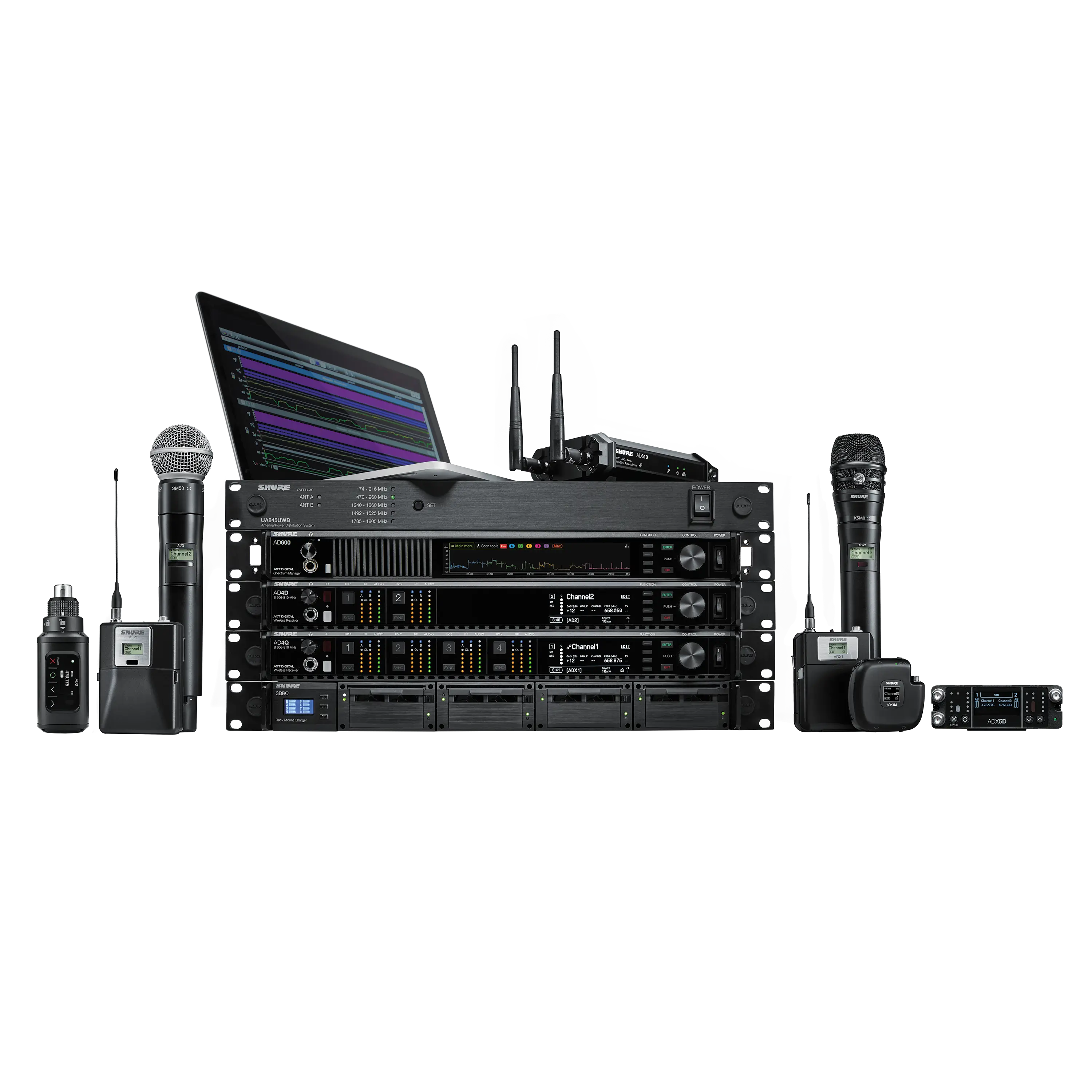
Today, the benefits touted in Shure advertising of the 1950s have evolved into sophisticated digital wireless solutions capable of supporting more than 100 channels simultaneously. Introduced in 2017, the Shure Axient Digital system represents the culmination of decades of wireless microphone innovation, offering advanced frequency agility, scalability, and reliability for professional audio applications.
A Place in History
Within the Shure archives, six Vagabond transmitters, one receiver, and numerous historical documents remain as reminders of a pioneering era in wireless audio technology.
While the exact number of Vagabond “88” systems sold between 1953 and 1960 may never be known, its place in audio engineering history is much clearer. The Vagabond “88” is widely recognized as the world's first wireless microphone system with a handheld transmitter designed specifically for live performance, helping lay the foundation for the wireless microphone systems used today.
FAQ: The Shure Vagabond “88” and Wireless Microphone History
When were wireless microphones invented? Wireless microphone technology began emerging in the 1940s, with documented commercial applications appearing in 1947 and 1951. The Shure Vagabond “88” was introduced in 1953 as one of the earliest practical wireless microphone systems.
Was the Shure Vagabond “88” the first wireless microphone? The Vagabond “88” is recognized as the first wireless microphone system with a handheld transmitter designed specifically for live performance.
How did the Vagabond “88” work? The system used a battery-powered handheld transmitter to send an audio signal wirelessly to a receiver, which then converted the signal for use with PA systems, recording equipment, and broadcast facilities.
Why wasn't the Vagabond “88” more widely adopted? Although innovative for its time, the system faced challenges including a high purchase price, limited operating range, fragile vacuum tubes, and the need for regular adjustment and maintenance.
Who was responsible for developing Shure's first wireless microphone? Shure development engineer Elmer Carlson played a key role in the early development of the company's wireless microphone technology, beginning work on the concept in 1947.
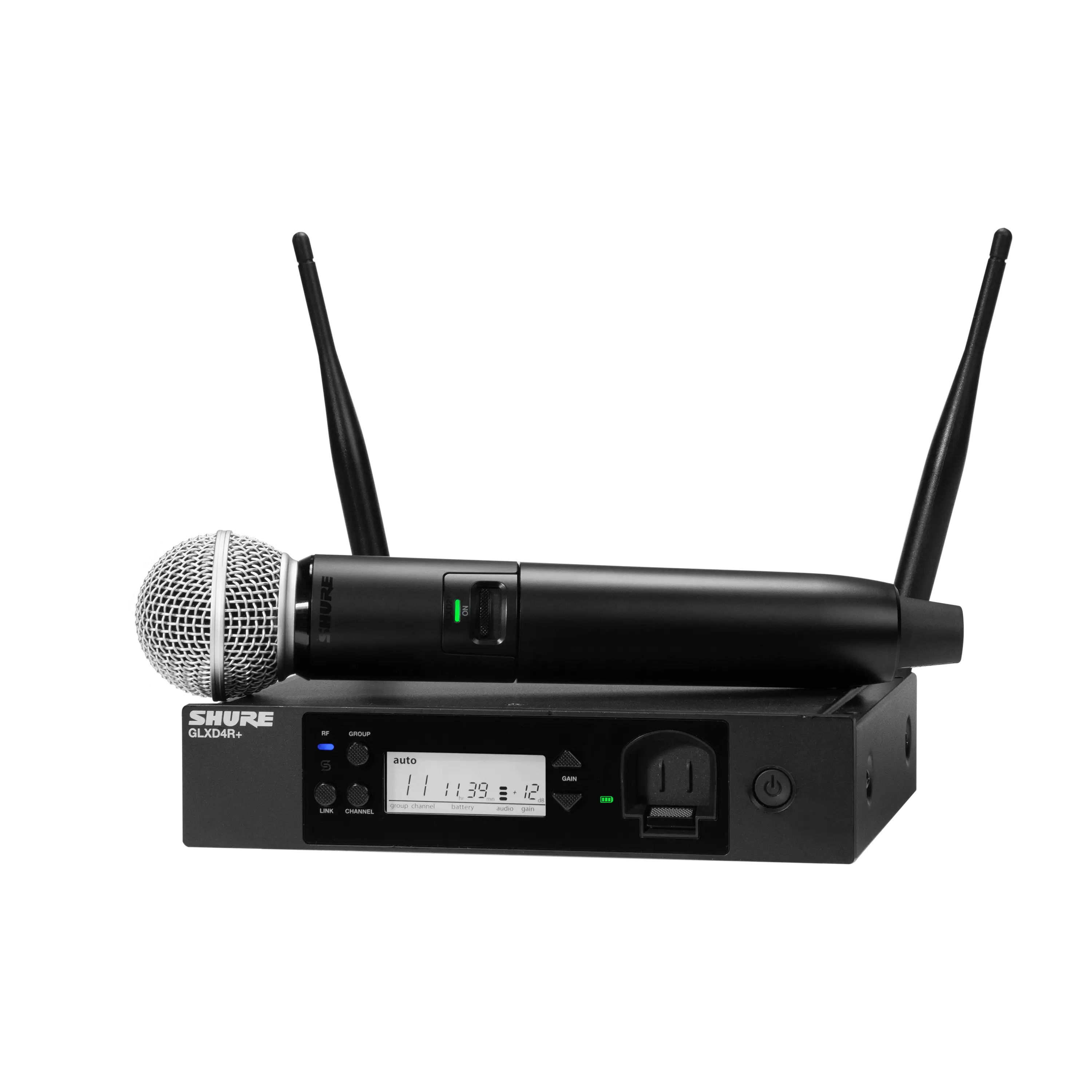
How does the Vagabond “88” relate to modern Shure wireless systems like Axient Digital? The Vagabond “88” introduced the idea of cable-free performance, while modern systems like Shure Axient Digital and SLX-D+ deliver that same freedom with advanced digital wireless technology, frequency agility, support for large channel counts, and significantly greater reliability for professional audio applications.
Click here to learn more about current Shure wireless systems.

Related Products and Accessories

Related Stories

Axient Digital AD vs. ADX Series: What’s the Difference?
When choosing a professional wireless system, the differences between product tiers can sometimes feel confusing. Axient® Digital keeps things simple with one powerful receiver platform and two transmitter series: AD and ADX. Both deliver exceptional RF performance, audio quality, encryption, and spectrum efficiency, but ADX adds advanced tools for the most demanding productions. Understanding what they share—and where they differ—can help you choose the right solution with confidence.
Action Isolator Is Changing What Live Sports Broadcasts Sound Like
The sounds that define the game should lead the mix. Action Isolator is a professional audio processing software from Shure that isolates game audio in real time across up to eight channels and reduces crowd & ambient noise, with five AI-trained modes built for live sports broadcast.
What's the Difference Between the SM58 and the Beta58A?
The SM58 and Beta 58A are both reliable handheld vocal microphones with different pickup patterns, output levels, and tonal profiles. The SM58 has a cardioid pattern and familiar, forgiving SM-series vocal sound. The Beta 58A has a tighter supercardioid pattern, hotter output, extended response, and reduced handling noise.
Axient® Digital PSM Transmission Modes: Versatile Solutions for Every Application
Axient Digital PSM offers unmatched flexibility for today’s demanding RF environments. Explore the five available transmission modes and learn how each one helps monitor engineers balance range, channel count, latency, and reliability for every application.