Drop the Mic: Wie robust ist das SM58?

Wir alle kennen die Geschichten: ein findiger Roadie, der ein SM58 als Hammer benutzt. Ein SM58, das nach einem Hurrikan eine Woche unter Wasser überlebt. Oder Punk-Legende Henry Rollins, der sein SM58 „individualisierte“, indem er seine Daumenabdrücke in das berühmte Kugelgitter des Mikrofons drückte.
Keine Frage: Dieses Mikrofon ist auf Langlebigkeit ausgelegt.
Aber wie robust ist es wirklich?
Zunächst einmal verkraftet der SM58 extrem hohe Schalldruckpegel von 140 bis 180 dB – vergleichbar mit der Lautstärke eines Raketenstarts und deutlich lauter als die menschliche Stimme. Damit ist es praktisch unmöglich, dass ein Sänger ein SM58 überlastet – anders als bei manch empfindlicherem Gesangsmikrofon.
Das SM58 ist ein dynamisches Mikrofon – ein Typ, der als robuster gilt als Kondensator- und Bändchenmikrofone. Das liegt vor allem an der inneren Mechanik, mit der diese Mikrofone Schallwellen erfassen und übertragen.
Das SM58 verfügt über einen dynamischen Tonabnehmer auf Basis des von Shure Ingenieur Ernie Seeler entwickelten Unidyne III. Zudem verfügt es über eine pneumatische Stoßdämpferaufhängung, die Bühnenvibrationen und Handhabungsgeräusche weitgehend eliminiert.
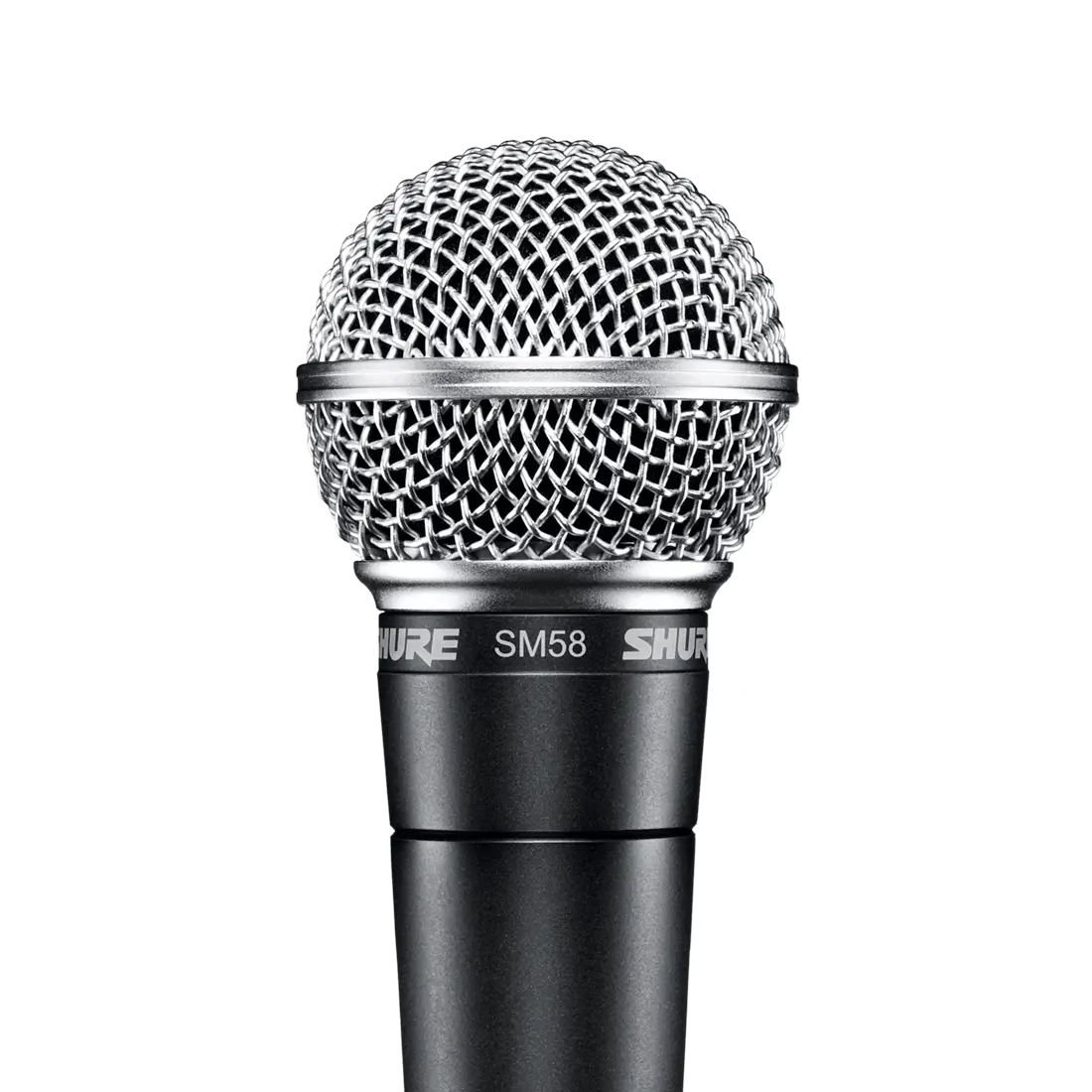
Der ikonische silberne Kugelgrill des Mikrofons erfüllt gleich zwei Aufgaben: Zum einen reduziert er Plosive und harte Konsonanten wie Ps und Ks. Zum anderen wirkt er wie eine Knautschzone am Auto und schützt den internen Tonabnehmer vor Schäden.

Fun Fact: Der Kugelgrill ist so konstruiert, dass er sich bei einem Aufprall verformt und die Energie absorbiert. So kam es, dass Black Flag-Sänger Henry Rollins bei einem Auftritt seine Daumenabdrücke in sein SM58 drückte. Eines seiner Mikrofone hielt offenbar über zehn Jahre und mehr als 750 Auftritte durch, bevor es erste Abnutzungserscheinungen zeigte.
Harte Tests
Wie ist diese Robustheit überhaupt möglich?
Alles beginnt mit extrem strengen Tests in den Shure Laboren. Bevor das SM58 1966 auf den Markt kam, verfeinerten Seeler und sein Team das heute ikonische Mikrofon durch Fallenlassen, Erhitzen, Einfrieren und Eintauchen von Prototypen. Bis heute führt Shure solche Haltbarkeitstests in Militärqualität (Mil-Spec) durch – darunter Tests mit salzhaltigem Nebel zur Rostprüfung sowie Temperaturschocktests mit extremer Hitze und Kälte.
„Diese Qualitätsstandards, die im Zweiten Weltkrieg eingeführt wurden, gelten auch heute noch“, sagt Shure Unternehmenshistoriker Michael Pettersen. "Deshalb sind unsere Produkte so langlebig."
Shure nutzt außerdem die branchenübliche Kennzahl Mean Time Between Failures (MTBF), um die Zuverlässigkeit des SM58 zu bewerten.Geht man von einer Nutzung von 14 Stunden pro Woche aus, hält ein durchschnittliches SM58 statistisch gesehen länger als ein Jahrhundert. Konkret berechnet Shure eine statistische Lebensdauer von 106,5 Jahren – basierend auf weltweiten Reparaturdaten von Geräten innerhalb und außerhalb der Garantie.
„Eine prognostizierte MTBF von über 100 Jahren unter realen Einsatzbedingungen ist ein Maßstab für Zuverlässigkeit – und unterstreicht den Ruf des SM58 als zuverlässiges Mikrofon für den langfristigen Einsatz“, sagt Mike Adashek aus dem Reliability Engineering Team.
Kein Wunder, dass das SM58 für seine Langlebigkeit bekannt ist.

ROBUST UND LANGLEBIG:
Doch seine Fähigkeit, rauen Bedingungen und wiederholter Beanspruchung standzuhalten, war 1966 nicht das Ziel, das weltweit härteste Mikrofon zu bauen. Pettersen erklärt, dass es damals schlicht gute Geschäftspraxis war – denn der Verkauf unzuverlässiger Produkte hätte dem Ruf des Unternehmens geschadet.
Das war ein entscheidender Faktor dafür, dass ein ursprünglich für den Studioeinsatz entwickeltes Mikrofon zur festen Größe auf der Bühne wurde: Das SM58 hält den harten Anforderungen von Live-Performances stand – und klingt dabei weiterhin großartig. „Unser Qualitätsteam bewertet das Mikrofon weiterhin aus Sicht der Anwender“, sagt Shure Quality Engineer Mirza Baig.
Natürlich gibt es zahlreiche Geschichten, in denen ein SM58 deutlich mehr Beanspruchung überstanden hat, als ein durchschnittlicher, übermütiger Musiker auf Tour verursachen kann.
Eine der berüchtigtsten Episoden war der "Foltertest" der schwedischen Pro-Audio-Publikation Studio. Sie ließen ein armes SM58 nicht nur fallen und badeten es in Bier, sondern nutzten es auch als Hammer, froren es ein und steckten es sogar kurz in die Mikrowelle. (Shure empfiehlt ausdrücklich, so etwas nicht zu Hause auszuprobieren, Kinder!)
Als wäre das noch nicht genug gewesen, vergruben die schwedischen Lausbuben das Mikrofon ein ganzes Jahr lang im Hinterhof.. Unterirdisch und ungeschützt musste es Regen, Schnee, eisige Temperaturen und allerlei Kleintiere im Erdreich überstehen. Zwölf Monate später, nachdem es ausgegraben und sogar vom Schmutz befreit worden war, funktionierte das SM58 immer noch.
"Wenn man ein SM58 kauft und es richtig behandelt, muss man sein ganzes Leben lang kein anderes Mikrofon mehr kaufen", sagt Pettersen.

Verwandte Produkte und Zubehör
Weitere Beiträge

Hören, was die Pegelanzeigen nicht verraten – mit WAVETOOL
Jeder Engineer kennt den Moment, in dem etwas nicht ganz richtig klingt. Erfahre, wie WAVETOOL die Arbeitsweise moderner Audioteams unterstützt: durch die Überwachung aller Quellen, gezieltes Mithören und die Möglichkeit, kritische Momente noch einmal nachzuvollziehen, bevor daraus größere Probleme entstehen.
WAVETOOL 3 vs. WAVETOOL 4: Die Neuerungen im Überblick und warum sie wichtig sind
Von 50 % mehr Monitoring-Kapazität und einer bis zu sechsmal längeren Replay-Dauer über intelligente SCP Alerts bis hin zu einer neu gestalteten, flexibel skalierbaren Benutzeroberfläche und integrierten Funktionen für die Zusammenarbeit: WAVETOOL 4 entwickelt die Workflows weiter, denen Engineers bereits heute vertrauen.
What's the Difference Between the SM58 and the Beta58A?
The SM58 and Beta 58A are both reliable handheld vocal microphones with different pickup patterns, output levels, and tonal profiles. The SM58 has a cardioid pattern and familiar, forgiving SM-series vocal sound. The Beta 58A has a tighter supercardioid pattern, hotter output, extended response, and reduced handling noise.
Vom SM58 bis zum Nexadyne: 60 Jahre legendärer Sound
In den 60 Jahren seit seiner Einführung ist das SM58 zu einer Audio-Ikone geworden, die die Ingenieur:innen von Shure auch heute noch dazu inspiriert, die Grenzen der Mikrofontechnologie zu erweitern. Vom SM7dB bis zur neuen Nexadyne-Familie: Entdecke, wie Innovation weitergeht.