What's the Difference Between the SM58 and the Beta58A?

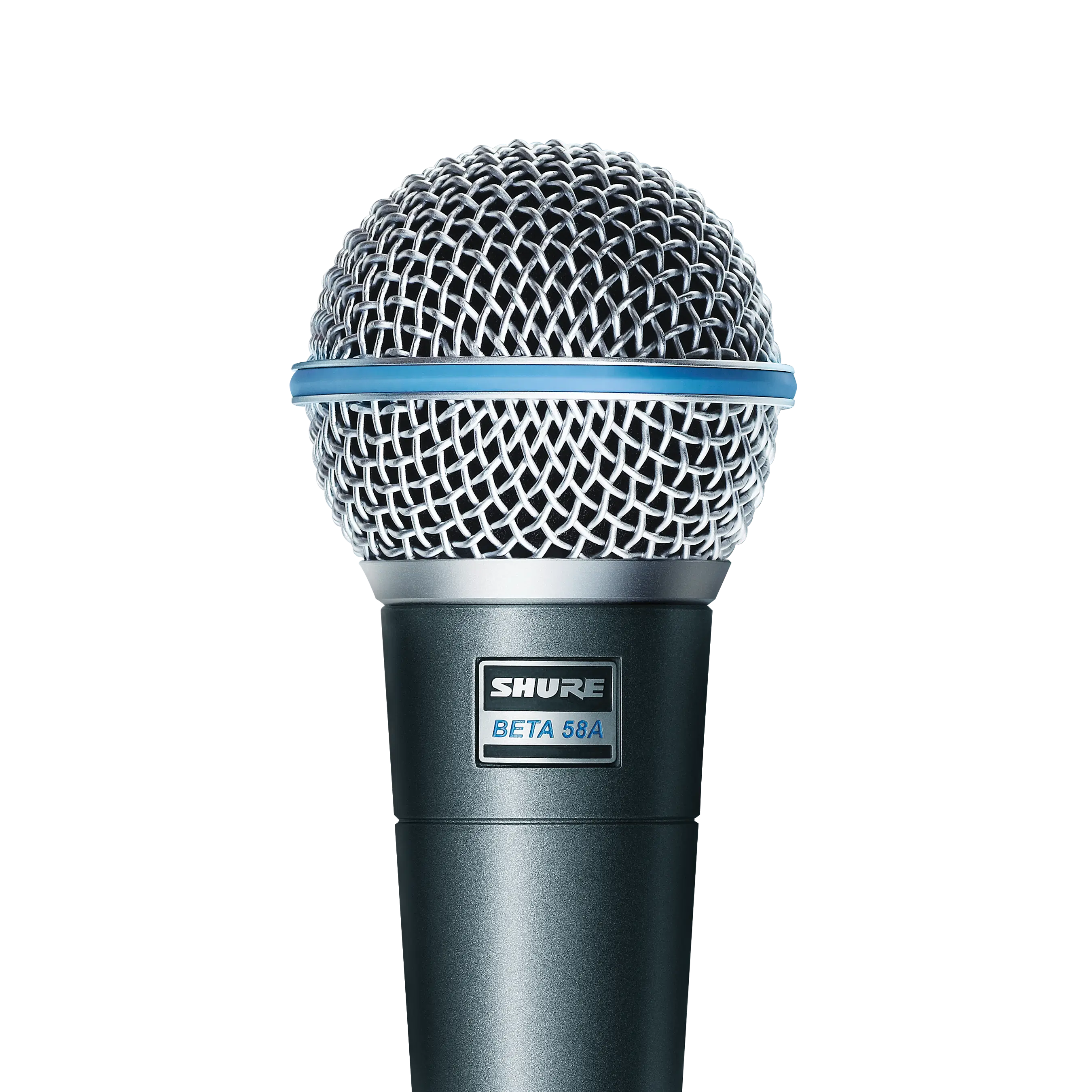
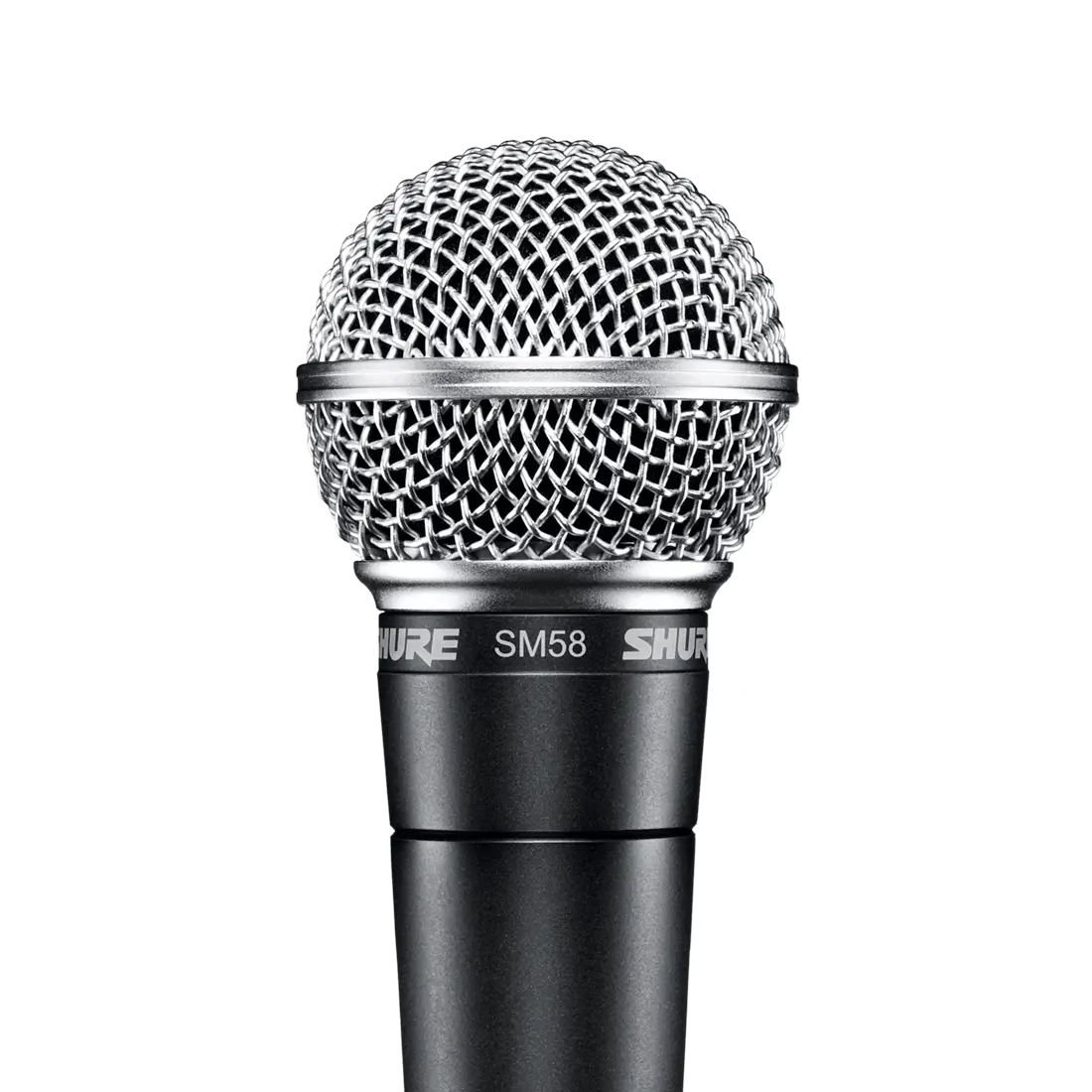
Our technical team here at Shure are regularly asked to describe the difference between our classic SM58 and its closely related cousin, the Beta 58A. Firstly, let's be clear: this is not a question of better or worse – both microphones are characterized by outstanding sound and performance. However, each model has key fundamental strengths suitable for different applications. Here are some of the key differences to bear in mind...
Polar Pattern:
Perhaps the most obvious difference is the microphone polar pattern. The SM58 has a cardioid polar pickup pattern, while the Beta 58A is a supercardioid. The polar pattern subsequently affects how you should use the microphone and where it would be most appropriate.
A cardioid microphone will reject best from the back while a supercardioid microphone will reject better from the sides. Both microphones pick up sound best from the front, but a supercardioid polar pattern has the added advantage of being more directional and therefore less susceptible to feedback when using correctly placed stage monitors.
Output Level:
Due to its neodymium magnet, the Beta 58A has greater sensitivity and a 4dB hotter output than the SM58.
Frequency Response:
The Beta58 has an extended low-end and high-end compared to the SM58. This does not necessarily mean the Beta58 is better, and depending on the style/tonal characteristic of your voice, you may or may not benefit from the extended frequency response.
Handling Noise:
The Beta 58A is quieter than the SM58 due to its advanced pneumatic shock mount system.
Grille:
The Beta 58A has a hardened grille, which makes it more difficult to dent.
Summary
| SM58 | Beta 58A |
| Primary role | Classic handheld vocal microphone for live performance | Premium handheld vocal microphone for live performance |
| Polar pattern | Cardioid: rejects sound best from the rear | Supercardioid: rejects sound better from the sides when stage monitors are placed correctly |
| Output sensitivity | Standard SM-series output | Hotter output, approximately 4 dB greater sensitivity |
| Frequency response | Familiar SM58 vocal sound | Extended low-end and high-end response for more detail |
| Handling noise | Pneumatic shock mount system | Advanced pneumatic shock mount system for quieter handling |
| Grille | Durable ball grille with built-in pop filtering | Hardened grille designed to resist dents |
| Best fit | Performers who want a classic, forgiving vocal mic | Performers who want more output, tighter pickup, and added detail |
Which Should I Choose?
Choose the SM58 if you want a proven vocal microphone with a cardioid pickup pattern, classic tone, and forgiving performance in a wide range of live settings. It is a strong fit when you value familiarity, durability, and straightforward monitor placement.
Choose the Beta 58A if you want more output, a tighter supercardioid pickup pattern, reduced handling noise, and a more extended sound. It is a strong fit when you need added clarity and feedback rejection on louder stages, provided your monitors are positioned for a supercardioid microphone.
The Beta 58A is no doubt an upgrade for many applications, but in some scenarios, these upgrades can also be a hindrance. For example, if you're performing in a heavy-metal band, and you typically shout or scream into your mic - you may not want the extra sensitivity and detail of the Beta58. At the end of the day, it's all a matter of application and taste!
For further information on choosing the right microphone, take a look at our post on "How to Choose the Best Microphone for Vocals."
Gerelateerde producten en accessoires
Gerelateerde verhalen

Ontdek wat de audiometers je niet kunnen vertellen met WAVETOOL | Shure
Elke engineer herkent het geluid dat erop wijst dat er iets niet helemaal in orde is. Ontdek hoe WAVETOOL de manier ondersteunt waarop audioteams nu al problemen oplossen: elke bron monitoren, aandachtig luisteren en cruciale momenten nakijken voordat ze uitgroeien tot grotere problemen.
WAVETOOL 3 versus WAVETOOL 4: Wat is er nieuw en wat is er belangrijk? | Shure
Van 50% meer monitoringcapaciteit en tot zes keer langere weergavetijd tot intelligente SCP-waarschuwingen, een vernieuwde, schaalbare interface en ingebouwde samenwerkingshulpmiddelen: WAVETOOL 4 bouwt voort op de workflow waar engineers al op vertrouwen.
Frequentiebeheer op muziekfestivals: een handleiding voor FOH-technici
Op moderne muziekfestivals wordt gebruikgemaakt van draadloze microfoons, in-ear-monitoring, intercoms en draadloze instrumenten. Het beperkte frequentiespectrum vereist professionele coördinatie, omdat er anders storingen of signaaluitval kunnen optreden.
What's the Difference Between Shure SM57 and Beta 57A?
The SM57 and Beta 57A are both rugged dynamic microphones for instruments and occasional vocals. The SM57 has a classic cardioid close-miking character, while the Beta 57A adds tighter supercardioid directionality, higher output, extended response, a more protective grille, and improved handling-noise control.
Van de SM58 tot Nexadyne: 60 jaar iconische Sound
In de 60 jaar sinds zijn oprichting is de SM58 een audio icoon geworden dat Shure engineers nog steeds inspireert om de grenzen van de microfoontechnologie te blijven verleggen. Van de SM7dB tot de nieuwe Nexadyne familie, ontdek hoe de innovatie doorgaat.