
5 Things To Know About QLX-D Digital Wireless

Key Takeaways
- QLX-D™ Digital Wireless delivers professional audio quality, RF performance, and reliability in a streamlined wireless microphone system designed for mid-size applications.
- The system combines simplified frequency coordination, Network Scan, and rechargeable battery options to help reduce setup time and simplify operation.
- QLX-D shares many core performance benefits with higher-tier Shure digital wireless systems, while focusing on the features most relevant to mid-size venues and installations.
- Efficient spectrum usage, AES-256 encryption, and IP networking make QLX-D a strong fit for corporate, education, worship, and live sound environments.
- Designed for ease of use and long-term durability, QLX-D helps audio professionals deploy and manage wireless systems with confidence.
The Shure wireless catalog is growing, giving audio professionals more options than ever before. By the same token, if you're shopping for a wireless system, it can be a challenge to figure out how much system you need, and which features are the most important. So, the more choices you have, the more confusing things can get.
With the introduction of QLX-D Digital Wireless, we sat down with Mu Yang from the product development team to learn more about the system. In this interview, Mu explains who the QLX-D wireless system is designed for, where it fits within the Shure wireless portfolio, and what users should know before choosing a digital wireless solution.

Who Is QLX-D Digital Wireless Designed For?
We say that QLX-D is ideal for mid-size events and installations, and for customers who need high-tier quality sound on a smaller budget. So, a two-pronged question: what are mid-sized venues and installations? And, when you have to cut some feature options to keep a system within a price range but without compromising sound quality, how do you decide what to cut?
QLX-D is for corporate events, live music performances, higher education, high schools, houses of worship, hotels, community theaters, and conference centers—lots of applications. These are many of the same applications served by ULX-D® Digital, Shure's higher-tier digital wireless system. The key difference is scale, so that's where the "mid-size venues and installations" designation becomes important.
In a corporate context, QLX-D is ideal when receivers operate on the same floor and network. Larger deployments spanning multiple floors, buildings, or campuses are generally better suited to ULX-D
For live sound applications, QLX-D is well suited to small- and mid-size venues. For large-scale stadium productions and other major events, systems such as ULX-D or Axient® are typically a better fit because they're designed with larger venues in mind.
In designing QLX-D, we cut the features for large-scale systems while retaining the same audio quality, reliability, and RF performance.

How QLX-D Compares to ULX-D
Let's dig a little deeper into some of the key features that distinguish QLX-D from ULX-D. Comparing the spec sheets for the two, there are some specs in common and some specs that are different. Could you tie specs to applications so that people can better understand which specs are important for their application?
Thank you for asking this question! This is so critically important. In terms of audio quality, reliability, and RF performance, as we said, they're the same. The key differences fall under two categories: network sophistication and RF flexibility.
Network Sophistication
If you use a third-party control system such as AMX® or Crestron®, network requirements can become an important factor when choosing between QLX-D and ULX-D.
In a corporate environment, QLX-D is designed for situations where all receivers operate on the same network, such as a single boardroom, performance space, or floor of a building.
ULX-D also includes several advanced networking and system-management capabilities not found in QLX-D, including:
- Dante™ digital audio networking
- Dual and quad receivers with audio summing
- Dual Ethernet ports
- ULXD6 and ULXD8
- SBC220 networked docking chargers
- More comprehensive receiver configuration directly from the front panel
QLX-D only allows you to control devices within the same network. Also, ULX-D offers dual and quad receivers with audio summing, Dante™ digital audio networking, and dual Ethernet ports. QLX-D doesn't have those advanced features. But, if you have a simpler network environment, with your gear on one rack, on one floor, using one network, then QLX-D is the right choice.
A few other differences related to network sophistication: ULX-D receivers have a very flexible user interface. Without having to look at the user guide, you can change all the parameters, like IP address, subnet mask, and gateways, on the receivers themselves. The display on QLX-D is simplified, so you can change the IP address and subnet mask, but you'll probably need a user guide to know how. Also, with QLX-D, you can't change the gateway, which is why the control string cannot communicate across subnets.
RF Flexibility
RF flexibility is the other key difference between QLX-D and ULX-D.
QLX-D transmitters have two levels of output power: 1 and 10 milliwatt (mW).
ULX-D bodypack and handheld transmitters offer a third option: 20 mW. ULX-D at 20 mW output can give a 3 dB hotter signal than QLX-D. That's useful in exceptionally rough RF environments because it gives you a better carrier-to-noise ratio.
Who benefits from that capability? Large-scale deployments such as corporate conferences with dozens of breakout rooms and many simultaneous wireless microphone channels. In those applications, ULX-D offers the RF flexibility needed to maximize channel count and spectrum efficiency.
For small- and mid-size deployments, however, QLX-D delivers the same core audio quality, reliability, and RF performance while simplifying operation and reducing cost.
Easy Setup, Frequency Coordination, and Rechargeable Batteries
Simplified Frequency Coordination
When we talked to audio pros around the world who use wireless systems in mid-size venues and installations, we discovered that their knowledge of RF frequency coordination varied widely. So, we quickly realized that we needed to make a product that customers could successfully set up and use, and that would make RF decisions for them automatically.
For example, users may have a general understanding of what the Scan feature does on a receiver, but they may not know what to do with the information provided by the scan. QLX-D can perform a scan on a single receiver and find the compatible channel for that receiver. The user only needs to press a button two times: Menu, Enter, and done. This takes two or three seconds, and the product makes the RF decisions for the user.
Compare this to a major competitor's product, which has a Scan feature that includes five or six steps, and requires the user to make three or four RF decisions along the way. This product requires a much greater understanding of RF coordination, and it takes longer to set up. On the other hand, using QLX-D is as easy as using your TV, radio, or cell phone. You press the button. You don't have to make RF decisions.
Network Scan for Multi-Channel Systems
For larger deployments, QLX-D includes Network Scan, which can coordinate frequencies for up to 60 channels in approximately 15 seconds.
This is excellent in live performance applications where the RF landscape changes throughout the day. Frequencies that worked during setup may later be affected by additional wireless devices, security systems, television crews, or other RF activity. Network Scan quickly identifies available frequencies and automatically re-coordinates the system based on the current RF environment.
Rechargeable Battery Technology
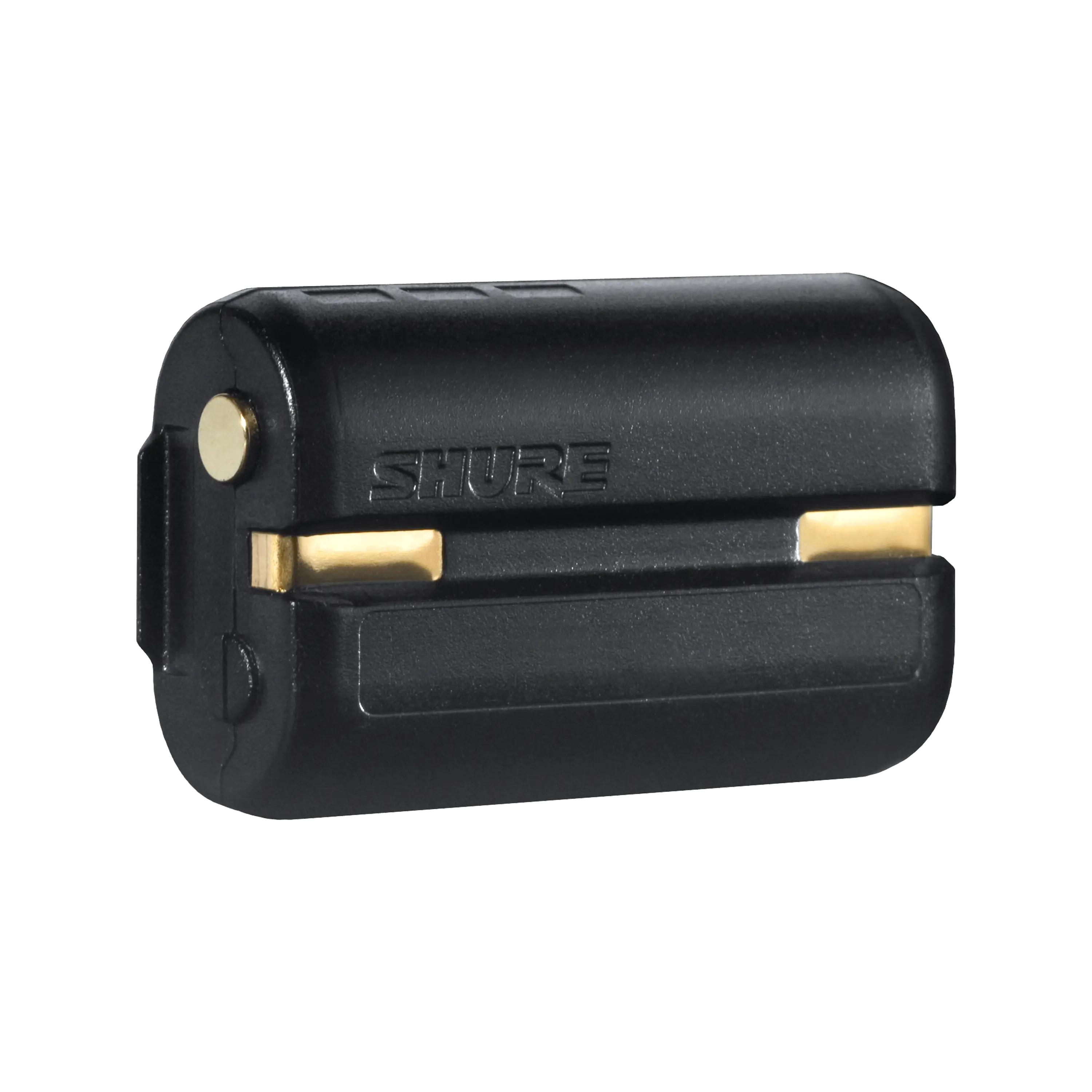
QLX-D supports both standard AA batteries and the SB900 Shure Lithium-Ion Rechargeable Battery.
You can charge the SB900 at any time without discharging it first. There's no memory effect. Also, there are a variety of charging options: we offer an eight-bay charger, a single-battery USB charger, and the dual docking station to charge the transmitter with the SB900 installed.
It charges quickly, too: 15 minutes of charging gets you an hour of use. One hour gets you halfway charged (approximately 5 hours). Three hours gets you to the full charge of 10 hours. With AA batteries, you get up to 9 hours of use, which is slightly less, but say your SB900 is dead, and you have zero time to recharge; you can pop the AAs in and be good to go.
The rechargeable battery also provides more detailed battery monitoring than standard AA batteries. Rather than a simple battery-level indicator, the receiver displays remaining runtime in hours and minutes, helping users better predict available operating time and manage battery replacement during an event.

Spectrum Efficiency and Channel Capacity
As the available spectrum becomes more and more limited, efficiency becomes more and more important at all market tiers. What makes QLX-D particularly efficient in this regard?
In the US, where QLX-D has a 64 MHz tuning bandwidth, we've put 67 preset compatible channels in the system. If you use Shure Wireless Workbench® software with QLX-D, you can easily tune to more than 100 channels.
The QLX-D customer most likely won't need to use that many channels very often, but the capability is there.
For mid-size venues and installations, QLX-D can support up to 17 channels within a 6 MHz TV channel, providing the channel density needed for many corporate, education, worship, and live sound applications.
AES-256 Encryption for Secure Wireless Audio
Last but not least, QLX-D offers AES-256 encryption. Who would need this feature? How does this encryption technology differ from other kinds?
As wireless microphones are increasingly used in corporate, education, and government environments, audio security has become more important.
For example, in boardrooms where confidential information is being shared, users need to know that no one else can hear their conversation. The same thing in government applications in which sensitive information is being discussed. Universities have gravitated toward using this feature too.

Durable Construction and Included Rackmount Hardware
Anything else people should know about QLX-D?
QLX-D Digital Wireless was designed with durability in mind. The bodypack, handheld transmitter, receiver chassis, and receiver front panel all feature metal construction for added robustness in demanding professional environments. The handheld transmitter does include a plastic battery cover and antenna dome but is otherwise metal.
To learn more about the QLX-D™ Digital Wireless system, including specifications, compatible transmitters and receivers, and available accessories, visit the QLX-D Digital Wireless page on shure.com.
FAQ: QLX-D™ Digital Wireless
Who is QLX-D Digital Wireless designed for? QLX-D is designed for mid-size applications such as corporate events, educational institutions, houses of worship, hotels, conference centers, community theaters, and live performance venues.
How does QLX-D compare to ULX-D? QLX-D delivers the same core audio quality, reliability, and RF performance as ULX-D, while focusing on the features most commonly needed in small- to mid-size wireless deployments.
Does QLX-D support networked frequency coordination? Yes. QLX-D includes Network Scan, which can automatically coordinate frequencies across multiple channels and adapt to changing RF environments.
Does QLX-D include rechargeable battery options? Yes. QLX-D is compatible with the SB900 Shure Lithium-Ion Rechargeable Battery and supports several charging options, while also allowing the use of standard AA batteries.
Is QLX-D a secure wireless microphone system? Yes. QLX-D includes AES-256 encryption, making it suitable for applications where protecting wireless audio communications is important.
How many wireless channels can QLX-D support? In the U.S., QLX-D can support up to 17 channels within a 6 MHz TV channel and can coordinate more than 100 channels when used with Shure Wireless Workbench® software.

Related Products and Accessories
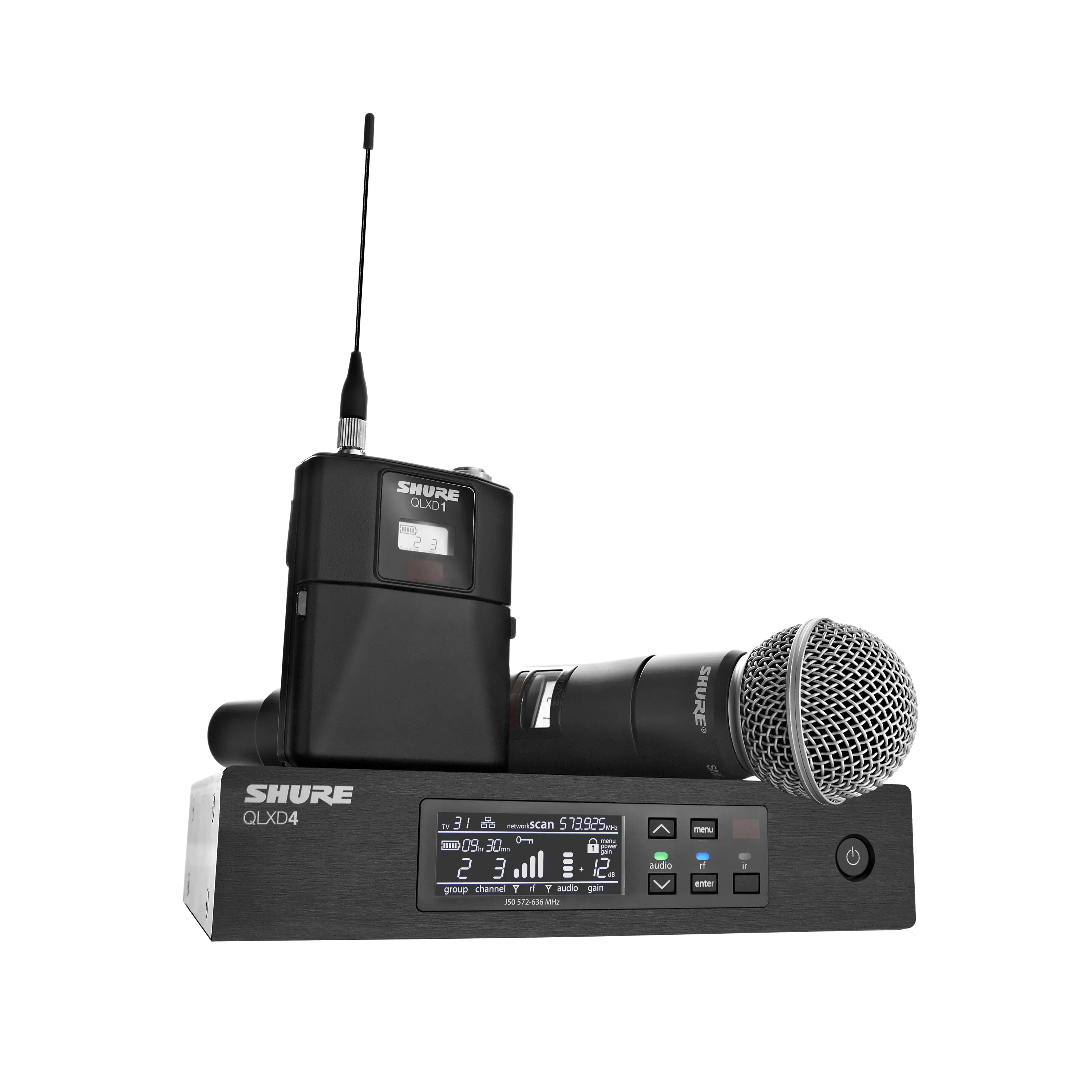 QLX-DDigital Wireless SystemsLearn More
 ULX-DDigital Wireless SystemsLearn More
 Axient DigitalDigital Wireless SystemsLearn More
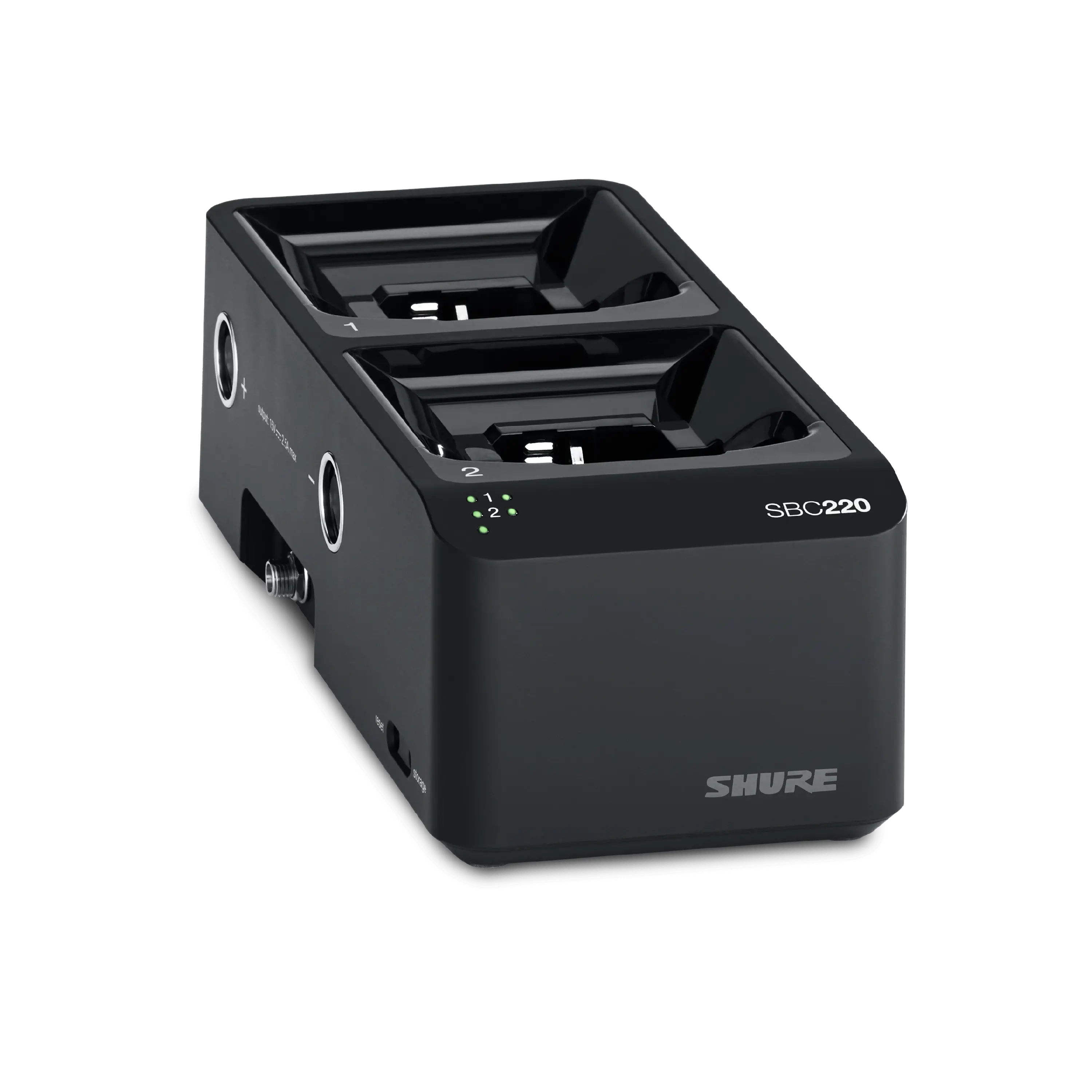 SBC2202-Bay Networked Docking ChargerLearn More
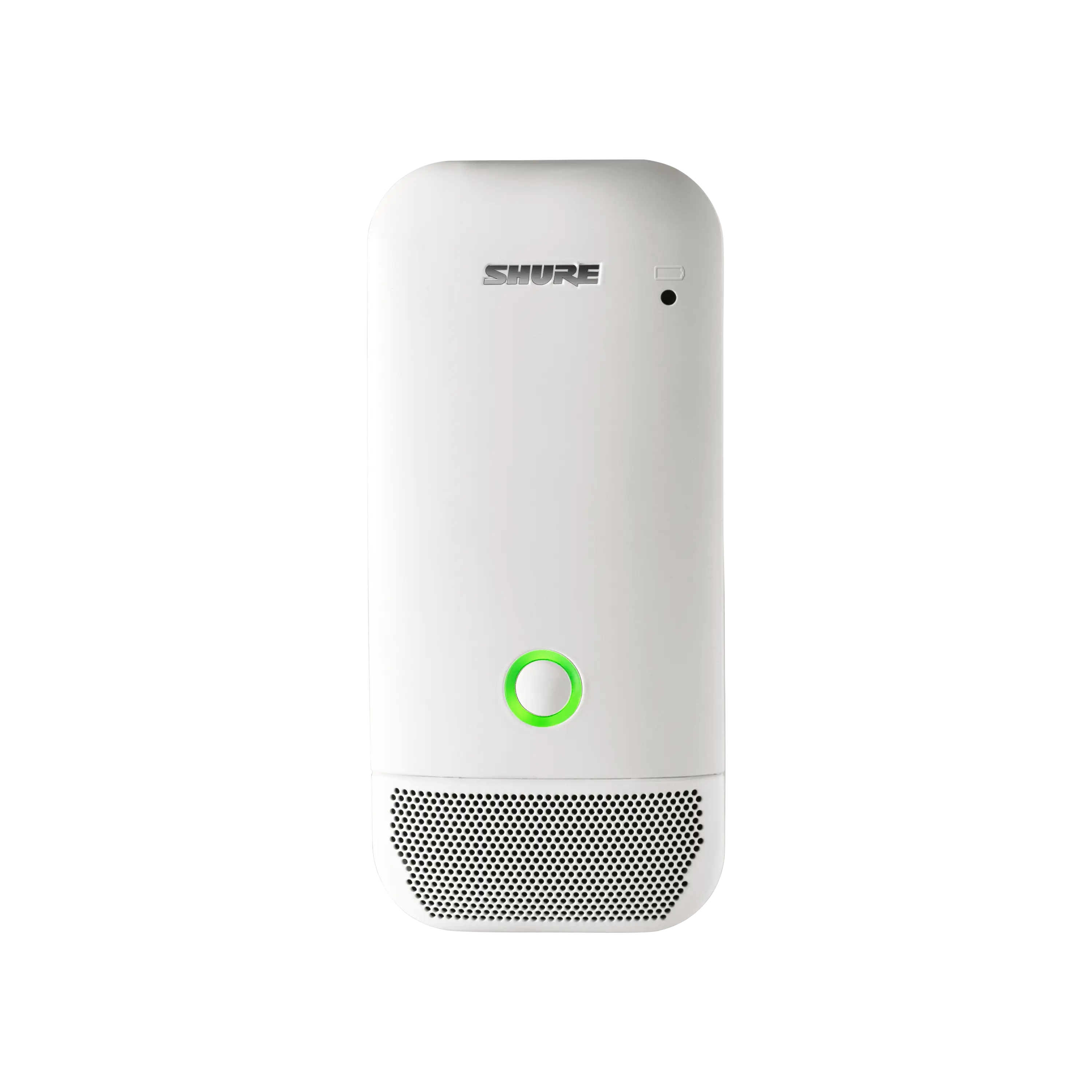 ULXD6Wireless Boundary Microphone TransmitterLearn More
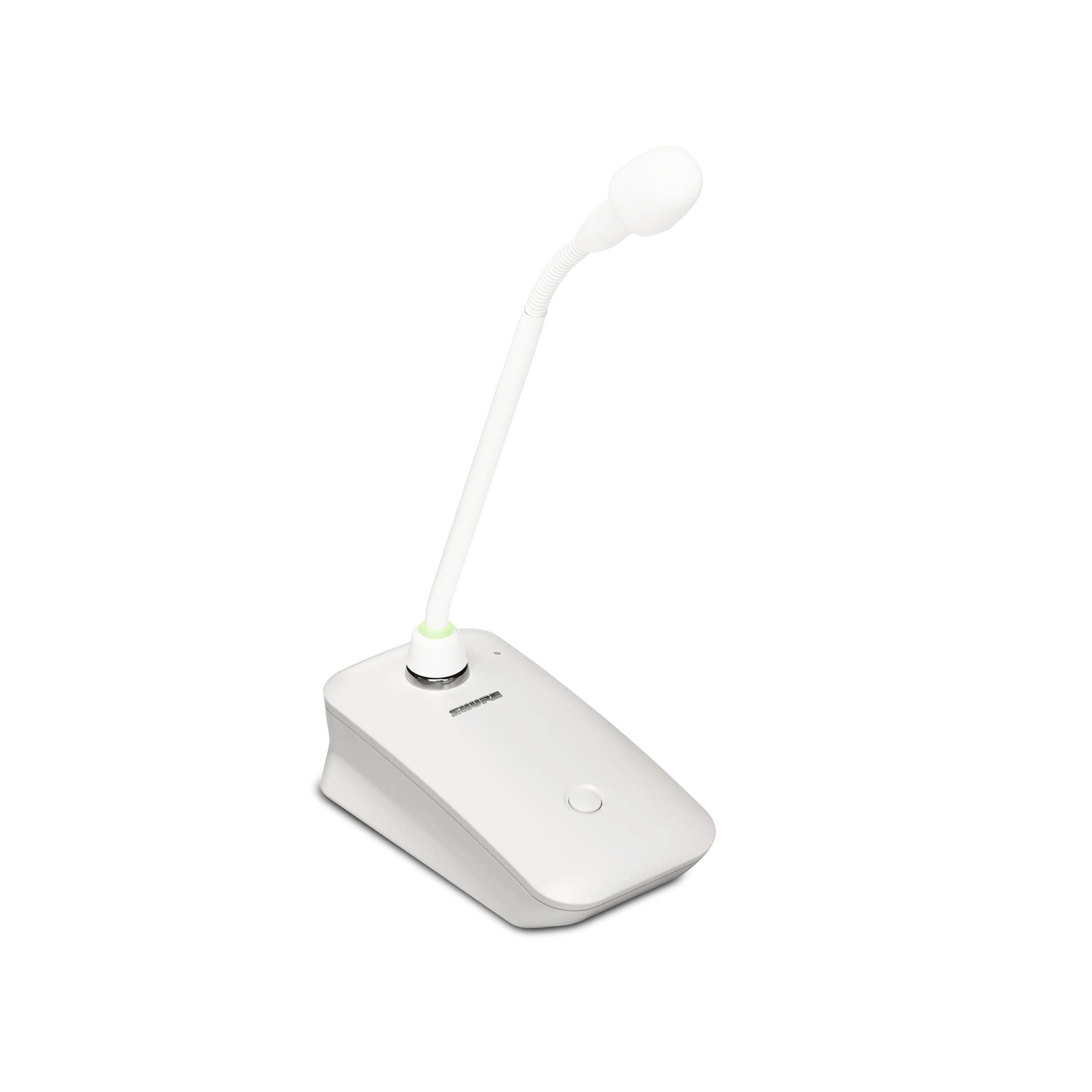 ULXD8Wireless Gooseneck Base TransmitterLearn More
 SB900CRechargeable Lithium-Ion BatteryLearn More