How to Choose the Best Mics for the Church Choir

When dealing with a soloist or a small group of vocalists, mic placement can be simple. However, if you are working with a church choir, things get more complicated. A choir microphone setup needs to capture all singers evenly, so the harmonies and lyrics come through clearly. It’s also essential that choir microphones deliver a natural, balanced sound across the entire group.
Using purpose-built microphones for church choirs and applying proper mic placement ensures the congregation can clearly hear every note. Clear, intelligible lyrics are especially important in a worship setting—if words are difficult to understand, then it might hinder the worship experience. Poor sound quality can also become a distraction, making it harder for the congregation to stay engaged in the message.
In this guide, we'll focus on choir microphone placement and show you how to get the best possible sound for your choral ensemble. We'll also highlight some of the best choir mics to help your chorus achieve clear, balanced, and consistent sound.
Microphone Type
Condenser Mics have thinner diaphragms with an electrically charged backplate, allowing them to produce a smooth, natural sound. Because condenser mics are more sensitive than dynamic microphones, they are better at capturing fine vocal details, making them a common choice for choir microphones in church settings.
Dynamic Mics provide a warm, full sound and can handle extremely high sound levels without distorting. They operate similarly to a loudspeaker in reverse, using a diaphragm, voice coil, and magnet to turn a sound wave into an audio signal. This makes them a reliable option for louder applications.
For most choir applications, a condenser mic with a cardioid or super-cardioid polar pattern is preferred. These microphones reject feedback while still capturing a wide area, making them well-suited for group singing and choir microphone placement across multiple singers. Condenser mics can also be made much smaller than dynamic microphones while maintaining the same bass response.
How many choir mics do I need?
The short answer is to use as few choir microphones as possible. The fewer mics you use, the less likely you are to deal with feedback. A correctly placed cardioid choir mic can cover 15-20 singers arranged in a rectangular or wedge-shaped section about 10 ft wide and three rows deep.
How high should choir mics be?
There isn't a single rule, but choir microphone placement height plays an important role in achieving balanced coverage. Some professionals place microphones at the height of the tallest singer in the back row, while others raise them an additional 2–3 feet. This helps ensure even pickup and prevents front-row singers from overpowering those in the back.
How do you place a choir mic?
3:1 rule
The basic guideline for choir microphone placement is the 3:1 rule. Generally, placing choir mics 2–3 feet from the front row and spacing side microphones at three times that distance provides the best coverage. For example, if you place a mic 3 feet from your front row of singers, any additional microphones should be set 9 feet from your center mic on either side.
Why is the 3:1 rule important?
This spacing helps prevent a hollow sound caused by phase cancellation, also known as the comb filter effect. This occurs when microphones are placed too close together and capture both a direct and a delayed signal of the same vocal. These overlapping signals cause certain frequencies to cancel out, creating a frequency response that looks like an inverted comb. Unless you’re intentionally trying to create this filtered effect, it’s something you’ll want to avoid.
Recommended Choir Microphones for Church Choir
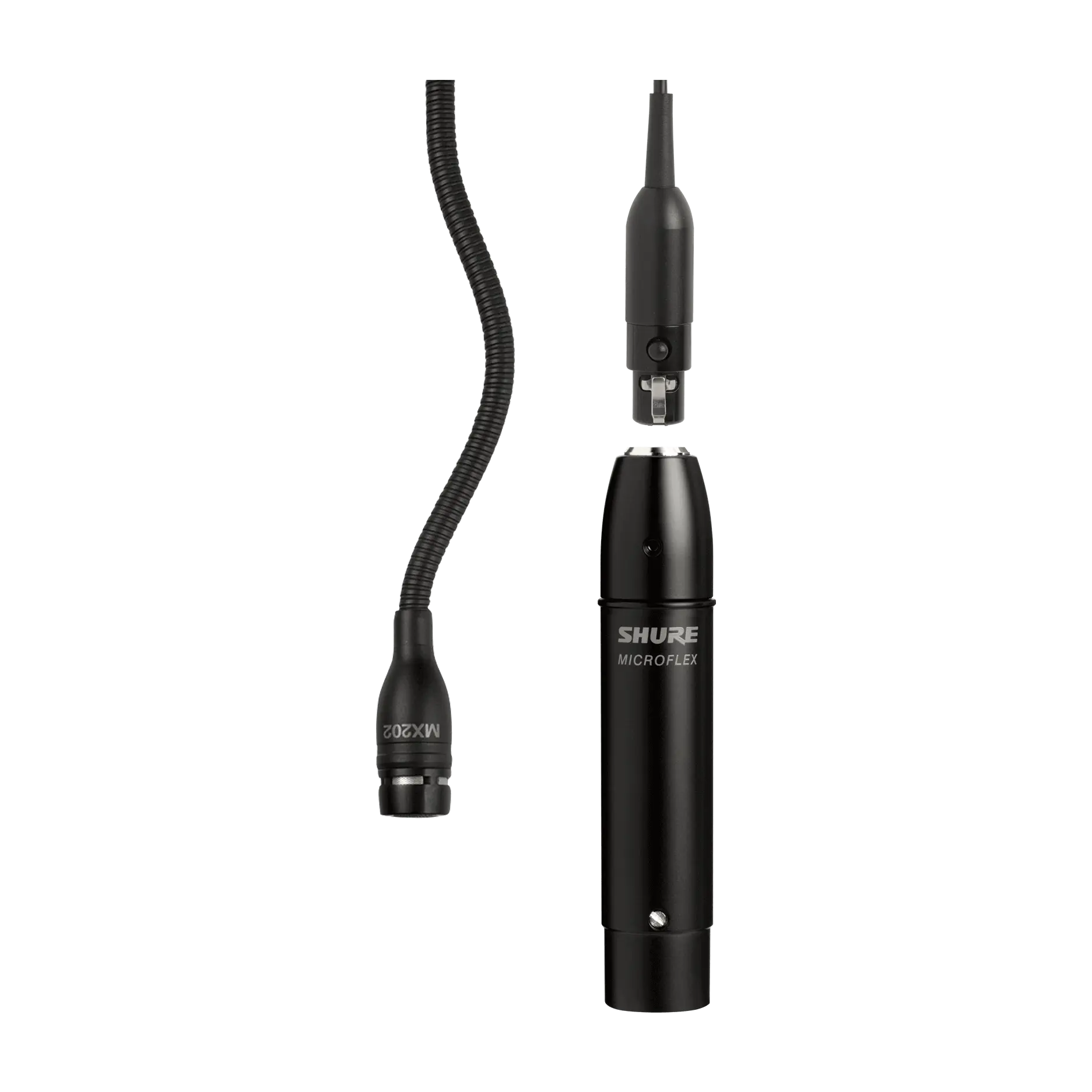
MX202
The MX202 is designed to be virtually invisible to the camera and can pick up sounds within a 50-foot radius, perfect for large choirs. Its interchangeable cartridges allow you to easily tailor the microphone to suit a wide variety of applications. You can easily position this choir mic above the choir to ensure a clear, natural sound and high intelligibility of every word in your congregation.

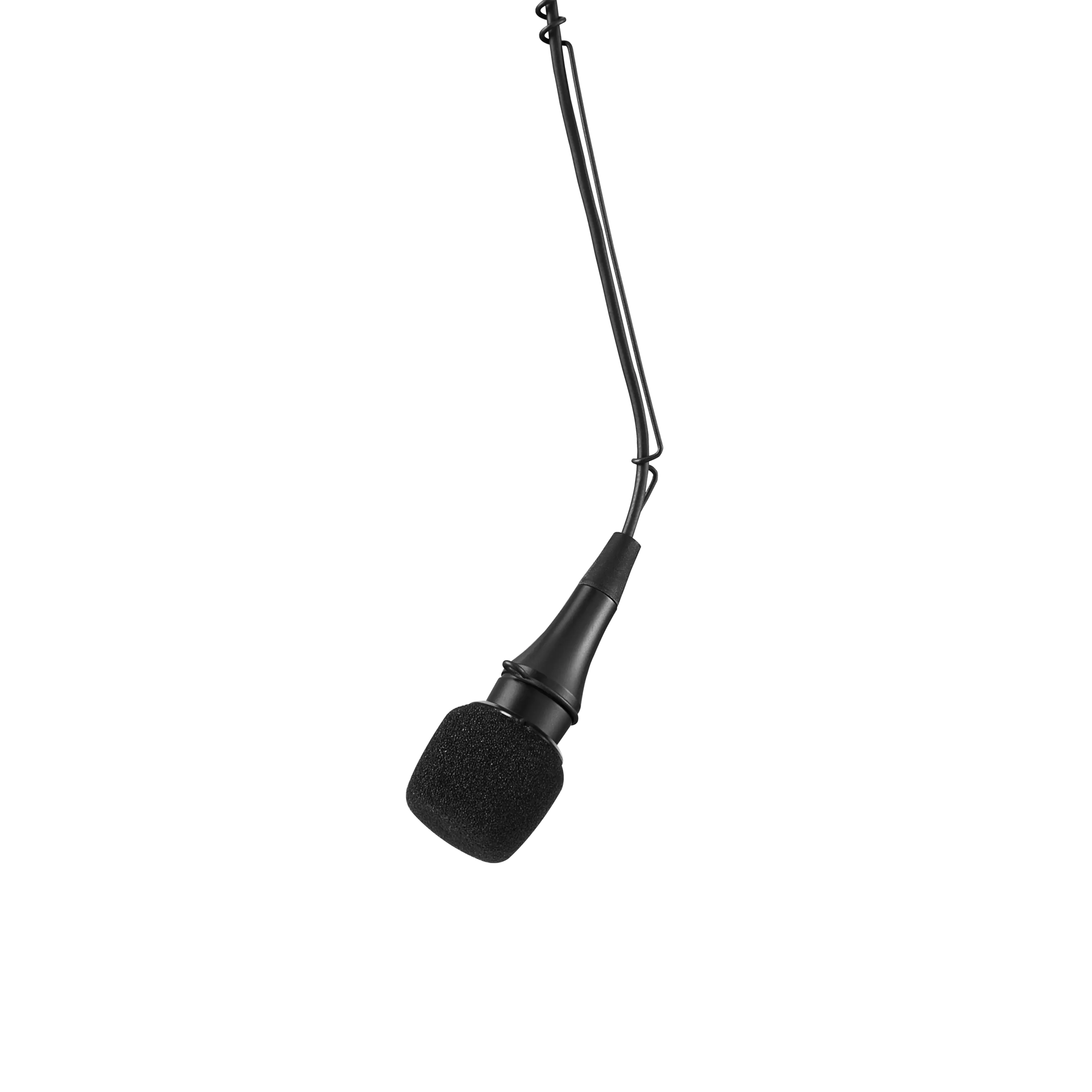
CVO
The affordable Shure CVO microphone is a versatile overhead condenser microphone for choir applications, featuring a polar pattern that provides a wide pickup angle for group singing. This choir microphone is discreet, blends in, and helps maintain focus on the performance without distracting the congregation.

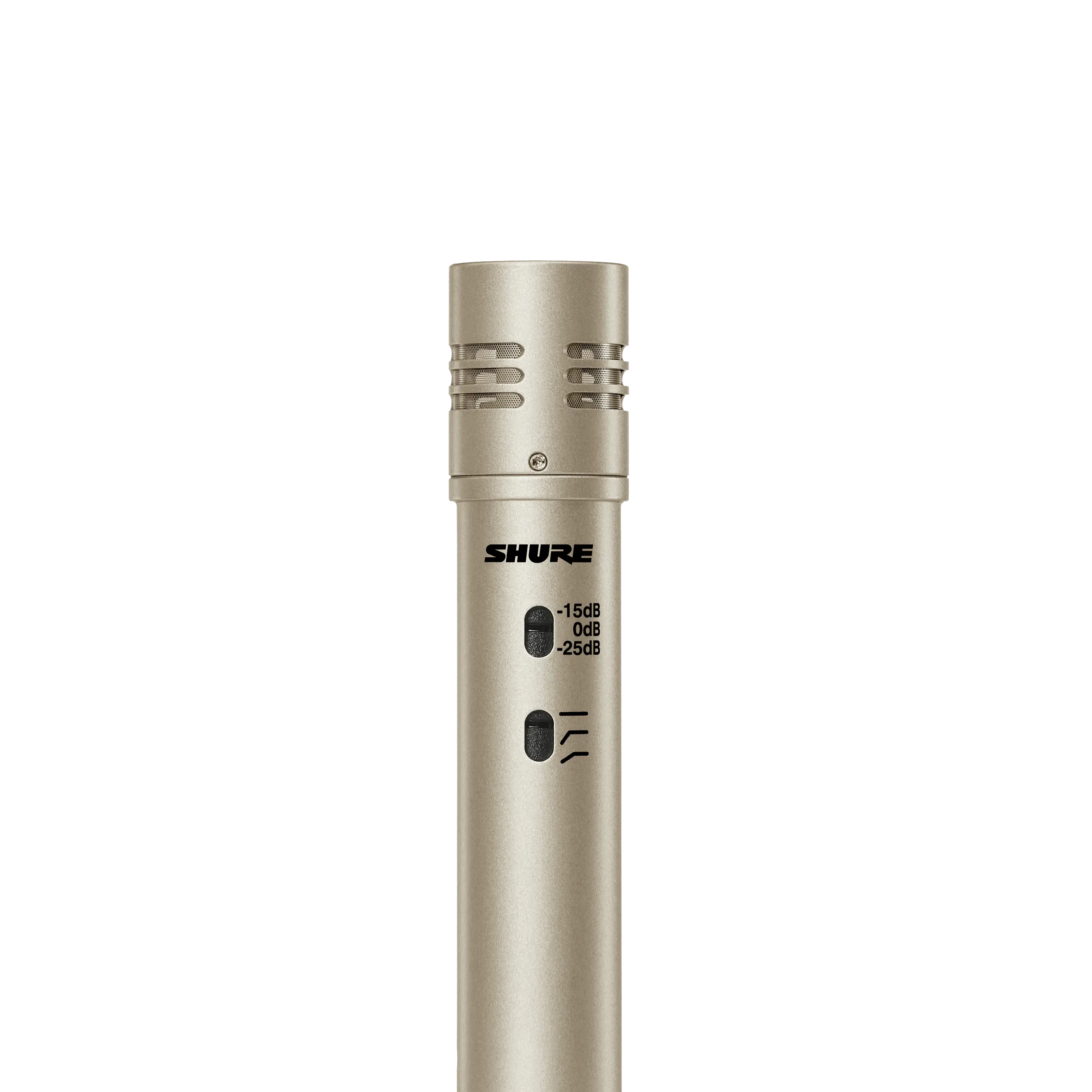
KSM137
For situations where the music director prefers using stand-mounted mics, the Shure KSM137 provides studio-quality sound for choir and group vocal applications. This cardioid microphone can handle extremely high sound input volumes, making it a reliable option for capturing clear, detailed audio in more dynamic environments.

FAQ: Choir Microphones and Placement
What are the best choir microphones for church? The best choir microphones for church are typically condenser microphones with cardioid or supercardioid patterns, as they provide wide coverage and clear, natural sound for group singing.
How many choir microphones do I need? Use as few choir microphones as possible. Fewer microphones reduce the risk of feedback, and a properly placed cardioid choir microphone can cover multiple singers effectively.
Where should choir microphones be placed? Choir microphones should be positioned 2–3 feet from the front row and spaced using the 3:1 rule to ensure even coverage and prevent phase issues.
What is the 3:1 rule for choir mics? The 3:1 rule means spacing microphones at least three times the distance from the sound source. This helps prevent phase cancellation and ensures clearer, more natural sound.
Are overhead microphones good for choirs? Yes. Overhead choir microphones are commonly used because they can capture multiple singers evenly while maintaining a natural blend and minimizing visual distraction.
Shure: The Perfect Choice for Your Choir's Sound Needs
Whether you're looking to mic the entire choir, the pastor, or the pianist, Shure can equip your House of Worship with all sound needs. Contact us today to get started!
For more guidance, explore Shure’s House of Worship Resource Center for additional tools, insights, and audio solutions.
Here are a few other resources you might find helpful:
Shure's Central Hub for Houses of Worship
How to Choose the Best Mic for the Pastor
How to Choose the Right Wireless Microphone System
How to Choose the Best Mics for Brass, Wind, and String Instruments
How to Choose the Best Mics for the Guitar at Worship
How to Choose the Best Mic for the Pianist

Related Products and Accessories
Related Stories

Axient Digital AD vs. ADX Series: What’s the Difference?
When choosing a professional wireless system, the differences between product tiers can sometimes feel confusing. Axient® Digital keeps things simple with one powerful receiver platform and two transmitter series: AD and ADX. Both deliver exceptional RF performance, audio quality, encryption, and spectrum efficiency, but ADX adds advanced tools for the most demanding productions. Understanding what they share—and where they differ—can help you choose the right solution with confidence.
Action Isolator Is Changing What Live Sports Broadcasts Sound Like
The sounds that define the game should lead the mix. Action Isolator is a professional audio processing software from Shure that isolates game audio in real time across up to eight channels and reduces crowd & ambient noise, with five AI-trained modes built for live sports broadcast.
Axient® Digital PSM Transmission Modes: Versatile Solutions for Every Application
Axient Digital PSM offers unmatched flexibility for today’s demanding RF environments. Explore the five available transmission modes and learn how each one helps monitor engineers balance range, channel count, latency, and reliability for every application.
How Leading Churches Are Improving Congregation Sound Capture in Their Livestreams
Digital array microphone technology is helping churches improve congregation sound capture in every church live stream with greater clarity, consistency, and cost-effectiveness. By better capturing congregational worship and room response, churches can create more immersive livestream audio experiences while simplifying system design and reducing microphone complexity.