How to Choose the Best Vocal Mics for Church Worship

Worship leaders have a mission to create an environment where every congregation member feels comfortable lifting their voice in praise. For Houses of Worship, singing is more than just the physical act of making noise with one’s vocal cords. Ministry songs are a key part of preparing the congregation to receive and engage with the message.
It’s now rare for vocalists, especially in church settings, to lead without the support of a microphone. With many services also streamed live, microphones for worship have become even more important to ensure every word and note is clearly heard—both in the room and online.
A common challenge for Houses of Worship is determining which handheld microphones are best suited for praise vocals. With so many options available, choosing the right microphone for church worship can feel overwhelming.
There are many considerations when picking microphones for the praise team, including handling noise, durability, feedback rejection, and overall sound quality. In the sections that follow, you’ll find practical guidance to help you choose the best handheld microphone for the worship vocalist to elevate your music experience
What Are Microphone Polar Patterns?
Every microphone has what’s known as a polar pattern—but what exactly does that mean? A polar pattern describes how a microphone picks up sound from different directions, or its inherent directionality. More specifically, it refers to how sensitive a microphone is to sound coming from different angles around its central axis.
Omnidirectional Microphones pick up sound equally from all directions, capturing audio from a full360-degree area around the capsule. These types of mics produce an open, natural sound and are often used in studio settings when the engineer wants to capture both the source and the sound of the room in the recording.
However, in live sound environments like church worship, omnidirectional microphones will also pick up ambient noise and are more prone to feedback.
Cardioid Microphones are designed to capture sound primarily from the front while rejecting sound from the rear and reducing pickup from the sides. This focused pickup pattern makes them a popular choice for microphones for church and other live vocal applications. By minimizing background noise and room ambiance, cardioid mics help improve clarity for vocals.
Supercardioid, as the name suggests, is like cardioid but more directional. It exhibits even less sensitivity to sound coming in from the sides than a regular cardioid but more sensitivity to sound at the rear. Despite that, supercardioids perform better when eliminating background noise and focusing on a specific sound source.
Tips & Tricks to Reduce Handling Noise in Handheld Microphones
Handling noise is an important issue in live sound environments like church worship, where handheld microphones are frequently moved during performance. Unlike studio microphones, which often use external shock mounts, handheld microphones rely on internal shock mounts and vibration control to reduce unwanted noise.
If you line up several microphones on stands, you’re likely to notice dramatic differences in the sound just from simply removing each mic from its clip. With some handheld mics, even small movements like shifting the mic in your hand, can cause unwanted rumble.
Mics that exhibit excessive handling noise will also pick up excess noise from anything that moves on or vibrates on the stage – such as footsteps, the kick drum, dancing, etc.
For this reason, It’s critical to pick a handheld mic with strong internal shock mounting that helps minimize handling noise. Some microphones are practically immune to handling noise.
One final thing to consider is that poor handling noise is more common in lower-quality dynamic microphones. Shure has spent decades advancing our handheld microphones to have an excellent internal shock mount to help minimize handling noise and improve performance in live worship environments.
Recommended Distances from the Microphone for Vocalists
One of the most common issues with handheld microphones for worship is incorrect mic distance. Holding a microphone too close can cause your vocalist to sound muffled and distorted, while holding it too far away can make vocals sound weak or difficult to hear in a church setting.
You may have heard singers say to “eat the microphone,” but that doesn’t mean literally. “Eating the microphone” means you should keep the mic positioned close to the mouth, typically about one to two inches away. For most vocalists, maintaining a distance of about 2–3 inches from the mouth helps achieve clear, balanced vocal sound without distortion.
Sometimes, your worship vocalists will use more volume to hit higher or louder notes on the chorus of a song versus using lower or softer notes in the verses. When your vocalists get louder, the idea is to move the microphone slightly away from the mouth.
The variance in the distance will be proportionate with the increase in volume – that is, the louder you sing, the more you pull back – but how far is something you’ll need to determine by getting to know the mic. It will probably never be more than 5 or 6 inches.
Like many aspects of live sound, microphone technique takes practice. The exact distance will vary based on the vocalist, the microphone, and the environment, so some experimentation is necessary to achieve the best results.
It can feel like there are endless options when choosing the best handheld microphones for your worship team – especially when balancing performance with your House of Worship budget. We’re here to help by introducing you to three microphones that you will want to have in your audio arsenal. Even better, these mics are all available as wired or wireless handheld microphones.
Best Handheld Microphones for Your Worship Team
Nexadyne 8
Built on Shure’s patented dual‑engine design, the Nexadyne 8 delivers clear, detailed vocals with added warmth and presence to help your voice stay front and center in a worship mix. Available in cardioid and supercardioid polar patterns, it lets singers choose the pickup that fits their style while helping maintain strong vocal focus and isolation on stage.

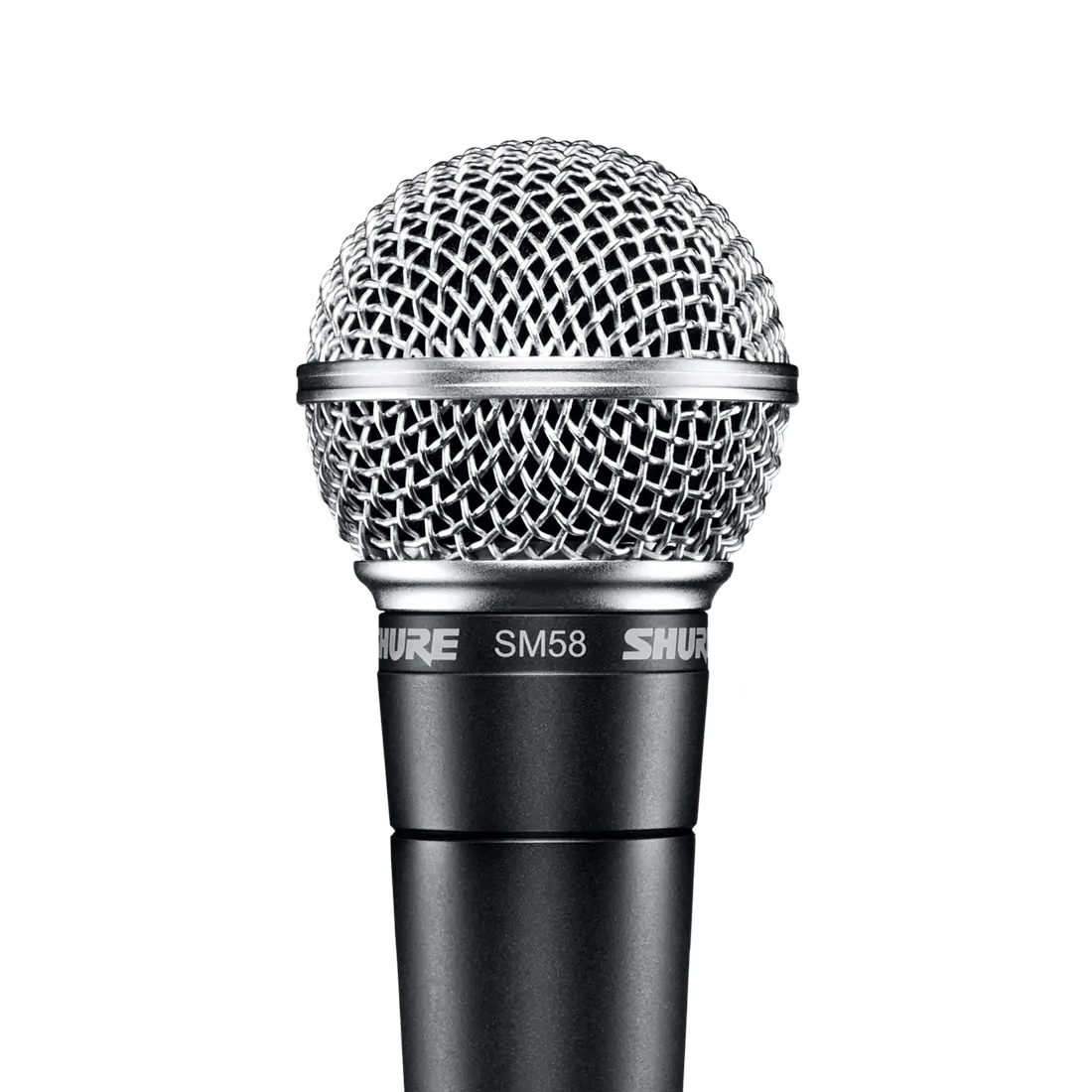
SM58
The affordable SM58 is one of the most widely used vocal microphones. Worship leaders worldwide agree that the SM58 is vital to amplifying their ministry. And most importantly, your house of Worship budget will love them. These mics have a typical cardioid pattern and are built like a tank – meaning they can take a variety of real-world wear and still work beautifully. The SM58 also uses an internal shock mount to reduce handling noise.

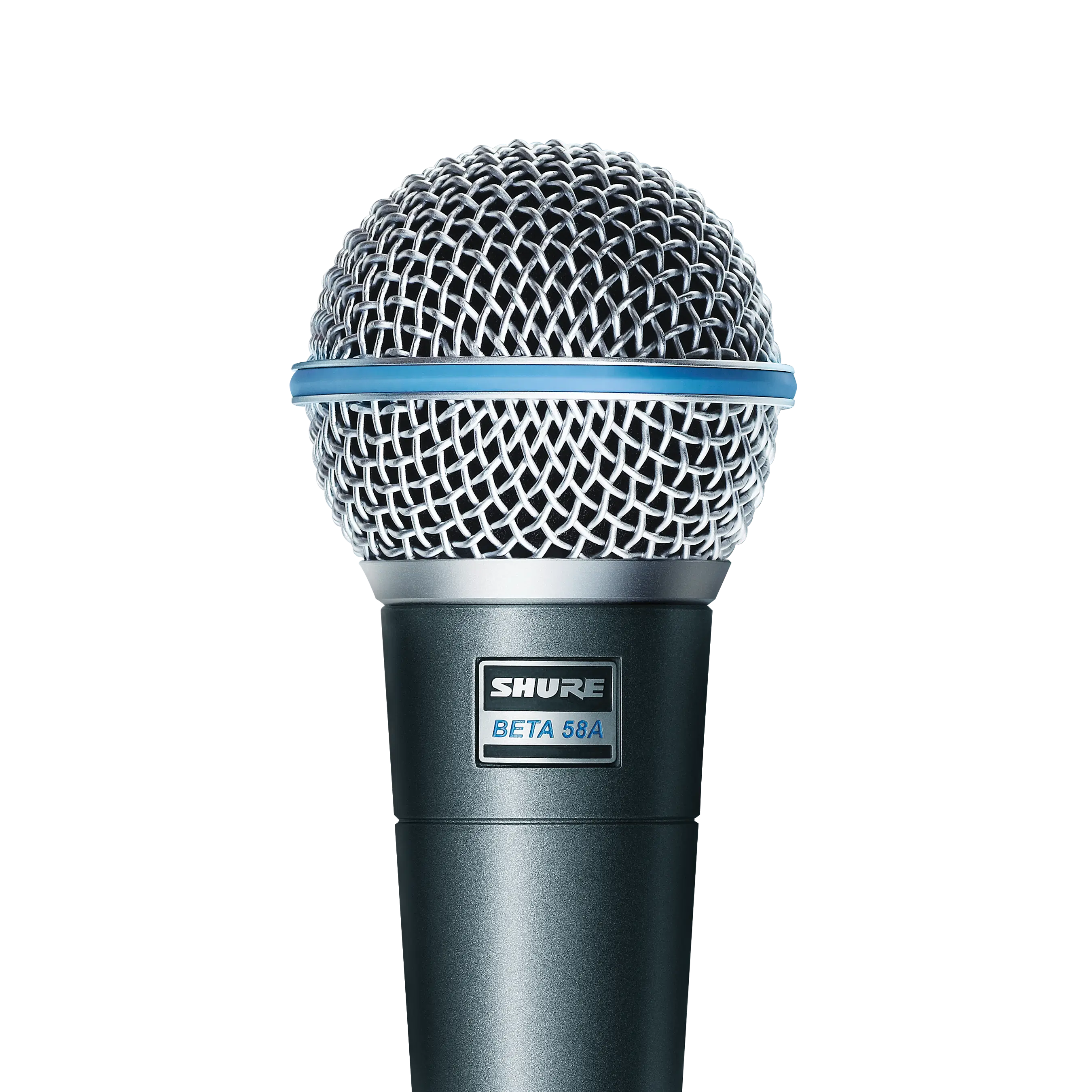
BETA 58A
The BETA 58A will ensure your vocalists stand out in modern worship bands that consist of drums and electric guitars. The BETA 58A microphone has been known as the vocalists’ best friend for decades, elevating vocal presence to cut through the other sounds. The brightened midrange and bass roll-off give the lead and background vocals a mighty presence in the mix. The supercardioid pattern works harder to isolate your sound from every other source in the air and allows for high gain before feedback. Beta 58A’s internal pneumatic shockmount minimizes handling noise as well.

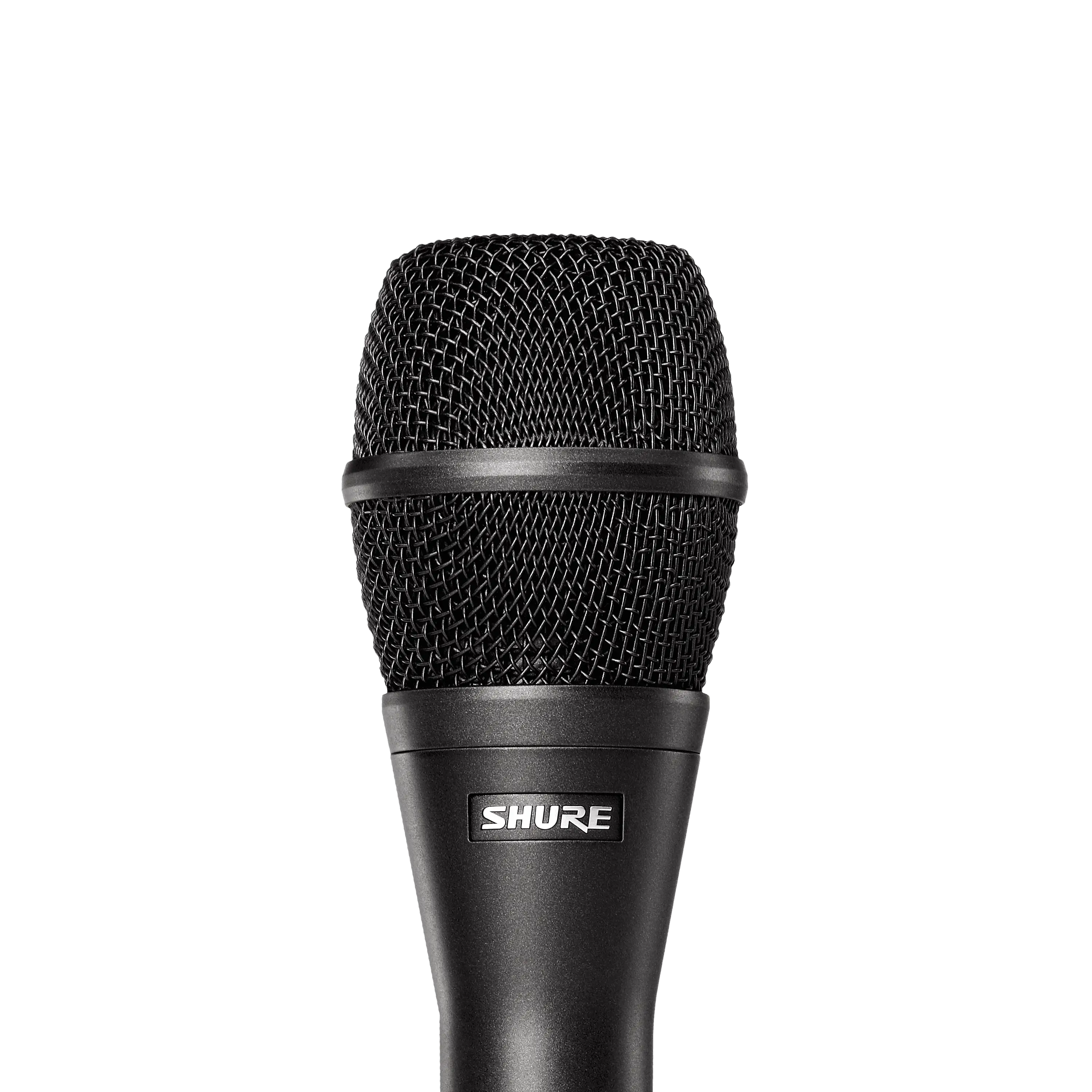
KSM9
The choice for the church’s most accomplished vocal performers, the KSM9 is a premium vocal condenser microphone that captures vocal subtlety with extraordinary detail. The KSM9 delivers clear articulation and precise audio production. The KSM9’s advanced suspension shockmount system minimizes handling and stand noise, while a built-in subsonic filter eliminates unwanted low-frequency rumble. If you want studio-quality sound in the most demanding worship environment, the KSM9 is an excellent choice.

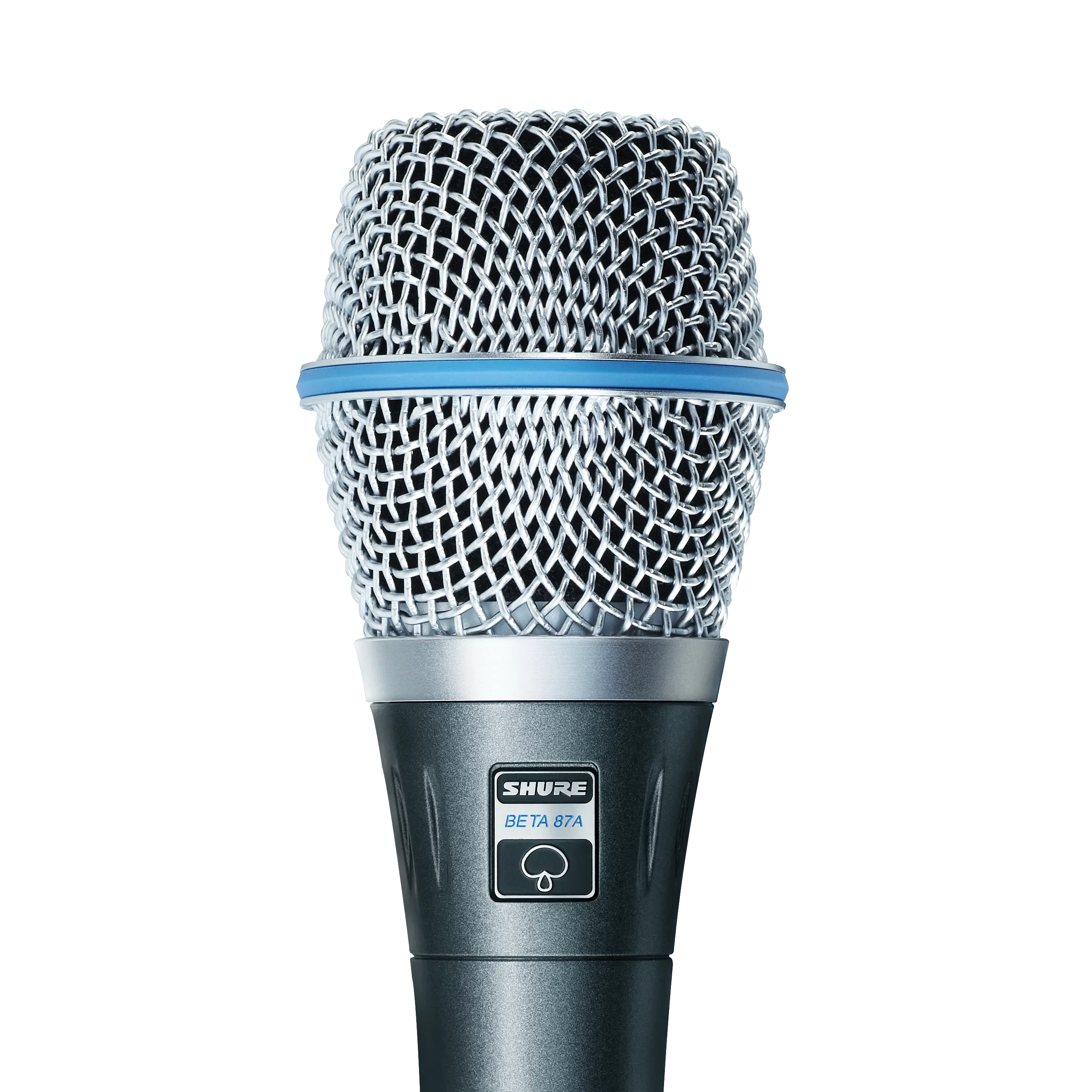
BETA 87A
Due to its extended frequency response, the BETA 87A is excellent for low-pitched voices. The BETA 87A has a super-cardioid pattern and a noticeably brighter tone that helps vocalists stand out in the mix. The Beta 87A microphones capture vocal subtlety with extraordinary detail to deliver clear articulation, functional flexibility, and precise vocal reproduction for live performance. Like all other Shure mics, the Beta 87A is built to withstand just about anything to ensure you can perform worship service after service.

FAQ: Handheld Microphones for Church Worship
What is the best handheld microphone for church worship? The best handheld microphone for church worship should deliver clear, natural vocals with strong focus and presence in a live mix. A modern option like the Shure Nexadyne® 8 is built on a patented dual‑engine design and delivers detailed vocal sound with added warmth, helping your voice stay front and center throughout your performance. With both cardioid and supercardioid polar patterns available, it also gives you the flexibility to choose the pickup that fits your style while maintaining strong vocal isolation on stage
Are handheld microphones good for singing in church? Yes, handheld microphones are ideal for singing in church because they provide flexibility, control over mic distance, and consistent vocal clarity for both live and streamed services.
What type of microphone is best for worship vocalists? Cardioid and supercardioid handheld microphones are often the best choice for worship vocalists, as they focus on the singer’s voice while reducing background noise and stage bleed.
How should a singer hold a microphone for best sound? For the best vocal sound, singers should hold the microphone about 1–3 inches from their mouth and adjust distance slightly based on volume to avoid distortion and maintain clarity.
Should I use a wired or wireless microphone for church singers? Both wired and wireless microphones work well for church singers. Wireless handheld microphones offer more freedom of movement, while wired microphones provide a simple and reliable setup.
Shure: The Perfect Choice for Your Worship Vocalist Needs
Whether you’re looking to mic your vocalists for worship, the pastor, or the piano, Shure can equip your House of Worship with all sound needs. Contact us today to get started!
Make sure to visit Shure’s House Of Worship Resource Center for additional tools, insights, and audio solutions.
Here are a few other resources you might find helpful:
Shure’s Central Hub for Houses of Worship
How to Choose the Best Mic for the Pastor
How to Choose the Right Wireless Microphone System
How to Choose the Best Mics for the Choir at Worship
How to Choose the Best Mics for Brass, Wind, and String Instruments
How to Choose the Best Mics for the Guitar at Worship

Related Products and Accessories

Related Stories

Axient Digital AD vs. ADX Series: What’s the Difference?
When choosing a professional wireless system, the differences between product tiers can sometimes feel confusing. Axient® Digital keeps things simple with one powerful receiver platform and two transmitter series: AD and ADX. Both deliver exceptional RF performance, audio quality, encryption, and spectrum efficiency, but ADX adds advanced tools for the most demanding productions. Understanding what they share—and where they differ—can help you choose the right solution with confidence.
Action Isolator Is Changing What Live Sports Broadcasts Sound Like
The sounds that define the game should lead the mix. Action Isolator is a professional audio processing software from Shure that isolates game audio in real time across up to eight channels and reduces crowd & ambient noise, with five AI-trained modes built for live sports broadcast.
Axient® Digital PSM Transmission Modes: Versatile Solutions for Every Application
Axient Digital PSM offers unmatched flexibility for today’s demanding RF environments. Explore the five available transmission modes and learn how each one helps monitor engineers balance range, channel count, latency, and reliability for every application.
How Leading Churches Are Improving Congregation Sound Capture in Their Livestreams
Digital array microphone technology is helping churches improve congregation sound capture in every church live stream with greater clarity, consistency, and cost-effectiveness. By better capturing congregational worship and room response, churches can create more immersive livestream audio experiences while simplifying system design and reducing microphone complexity.